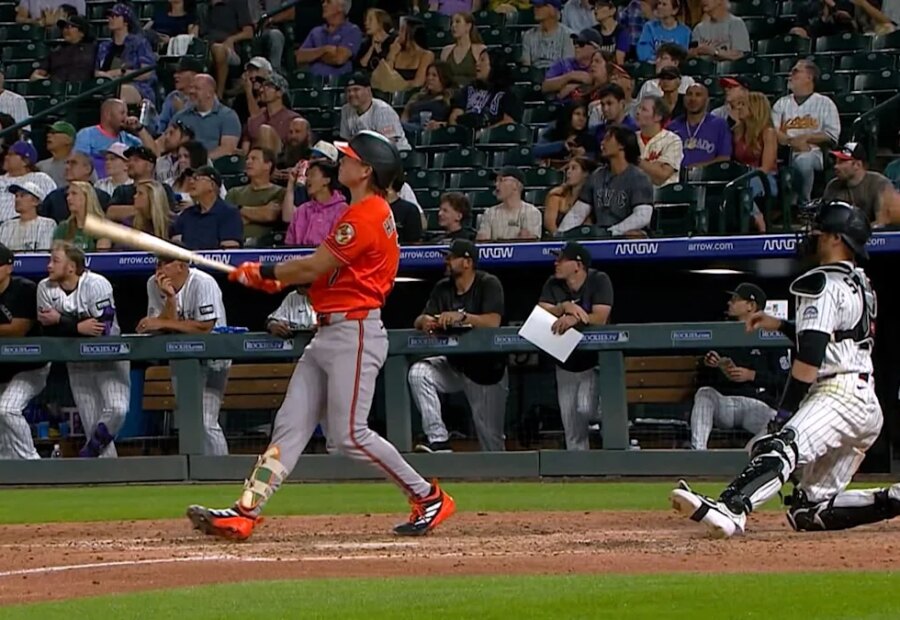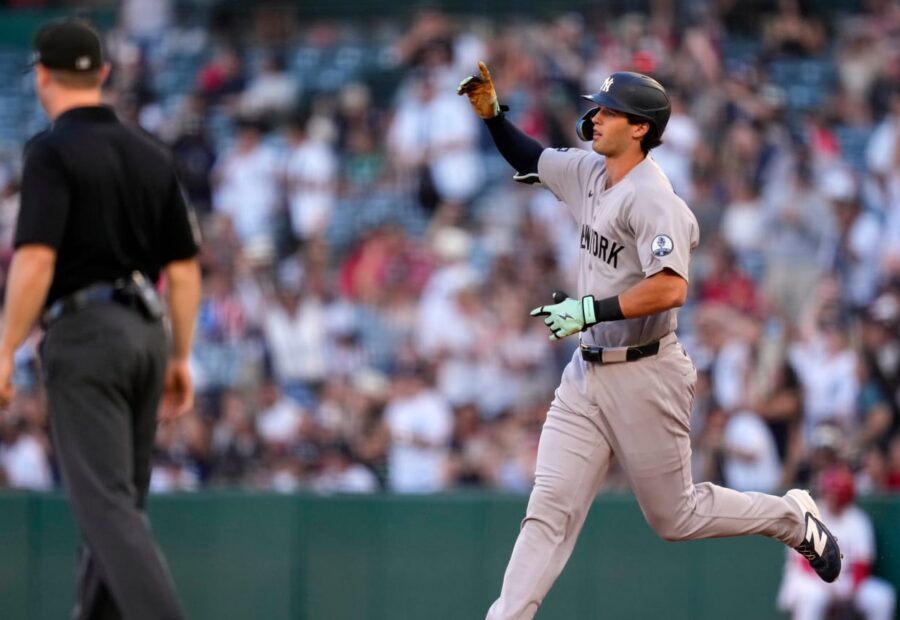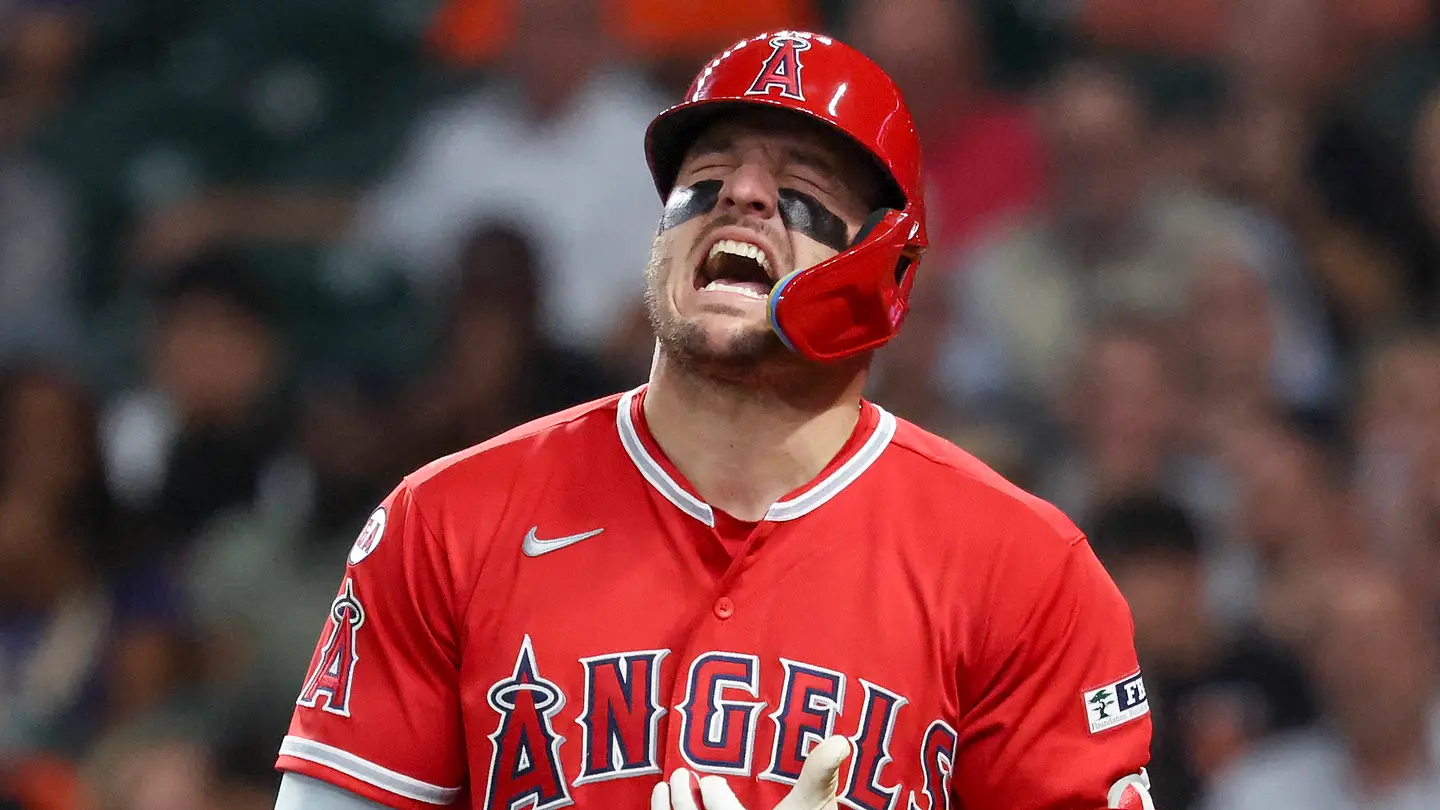
For a brief stretch this season, it was easy to believe Mike Trout’s massive contract extension might not become a long-term problem for the Los Angeles Angels. He was hitting home runs at Yankee Stadium, walking more often than he struck out and playing center field. He looked like the version of Trout Angels fans had not seen in years.
Then Trout injured his hamstring and returned to the injured list. The familiar questions resurfaced. That has become the defining pattern of his career: His talent has never been in doubt, and it still appears periodically. Trout continues to show why he received one of the largest contracts in baseball history, but his body also explains why the deal is not aging particularly well.
After this season, Trout will still be owed four years and just under $142 million. His contract runs through his age-38 season in 2030. He remains capable of doing several things well, but that is a substantial amount for the Angels to pay a declining player.
Mike Trout is still an above-average hitter
Even in his age-34 season and despite his extensive injury history, Trout remains a productive player. He is walking more often than he has since 2021. His strikeout rate has been elevated for several years, but it remains manageable. He has an OPS in the .800s and a weighted runs created plus (wRC+) around 130, meaning he is still producing at a rate well above the league average.
That production remains, although it is no longer at the level Trout reached during his peak. Comparing him with that version of himself is inherently difficult because his prime was among the best in baseball history. His contact quality is still elite, even though he has not sustained his hot start, when he approached a 1.000 OPS during the first month of the season.
Trout’s defense and injury history are the concern
The problems are emerging elsewhere. Trout moved back to center field this year, but the defensive results have not been strong. He has recorded minus-7 Outs Above Average (OAA) and minus-3 Defensive Runs Saved (DRS). Trout was not effective in right field last season, but the numbers were at least better during his limited time there.
He remains fast, although his speed has declined from elite in his younger years to very good. That is a byproduct of a body that has endured thumb, calf, back and other issues. The injuries have formed a pattern. His hamstring injury did not keep him out for long, but it is the latest addition to that history.
Trout turned 35 earlier this month. That is not particularly old by human standards, but it is an advanced age for a baseball player.
How Trout’s contract compares with other MLB deals
Trout’s contract could be worse, but few deals currently rank below it. The true bottom tier belongs to players who provide little or no production.
Kris Bryant will have two years and $52 million remaining on his contract after this season. He has made only 712 plate appearances in four years with the Colorado Rockies while appearing in just 170 games. Javier Baez is not in quite as difficult a position because he is down to the final year of his contract in 2027 at $24 million, but his deal has been a disaster for the Detroit Tigers. The Angels do not even need to look outside their own clubhouse: Anthony Rendon’s contract is one of the worst in baseball history.
Those are essentially dead-money contracts. Trout is nowhere near that category because he still produces when he is on the field. That is why his deal is not truly among the worst in baseball. However, it is beginning to resemble the contracts of former MVPs such as Corey Seager and Bryce Harper, although the risks are different in each case.
Seager is about halfway through the 10-year contract he signed with the Texas Rangers before the 2021 lockout. He will earn $31 million annually during the final five seasons, for a total of $155 million. He has played more than 123 games only once in the first five years of the deal and will barely surpass 100 games for the second consecutive season if he plays in all of Texas’ remaining games.
Seager suffered a concussion in June, his latest injury, but his declining production is an even greater concern for the Rangers. He is hitting .224/.321/.413, leaving the team with both a durability problem and a production problem.
Harper’s situation is different. He has been relatively healthy over the past few seasons and is on track to play most of the games this year. His risk is primarily positional. Harper moved to first base in 2023 to protect his elbow, but he has returned to right field to accommodate the Philadelphia Phillies’ trade-deadline acquisition of Luis Arraez.
That change carries some risk, even if it lasts only a few months. Harper has also shifted from being an elite hitter to being a very good one, and that could change again as he gets older.
The risk of paying superstar money
Trout’s contract probably belongs in the same general range as the deals held by Kyle Tucker, Framber Valdez, Francisco Lindor, Manny Machado, Mookie Betts, Christian Yelich and Trea Turner. If those teams could escape their contracts, they would, but the deals are not in the same category as the contracts of Bryant, Baez or Xander Bogaerts.
The calculation is broadly the same for all of them. Teams pay superstar money for a version of a player they are not guaranteed to receive during the second half of a long-term contract. That is not Trout’s fault, nor is it the fault of other stars whose large deals have not worked out as planned. Nobody forced Trout to suffer injuries, and nobody should begrudge him for accepting a massive contract when it was offered.
The Angels understood the risk. With few exceptions, when teams sign players to long-term contracts, they also assume responsibility for the post-peak years. Los Angeles now has four more years of Trout and can only hope he spends more time on the field than off it. He can still hit when he plays. The Angels must find a way to keep him healthy for the remaining four years and make the most of his production when he is available.
Source: halohangout.com