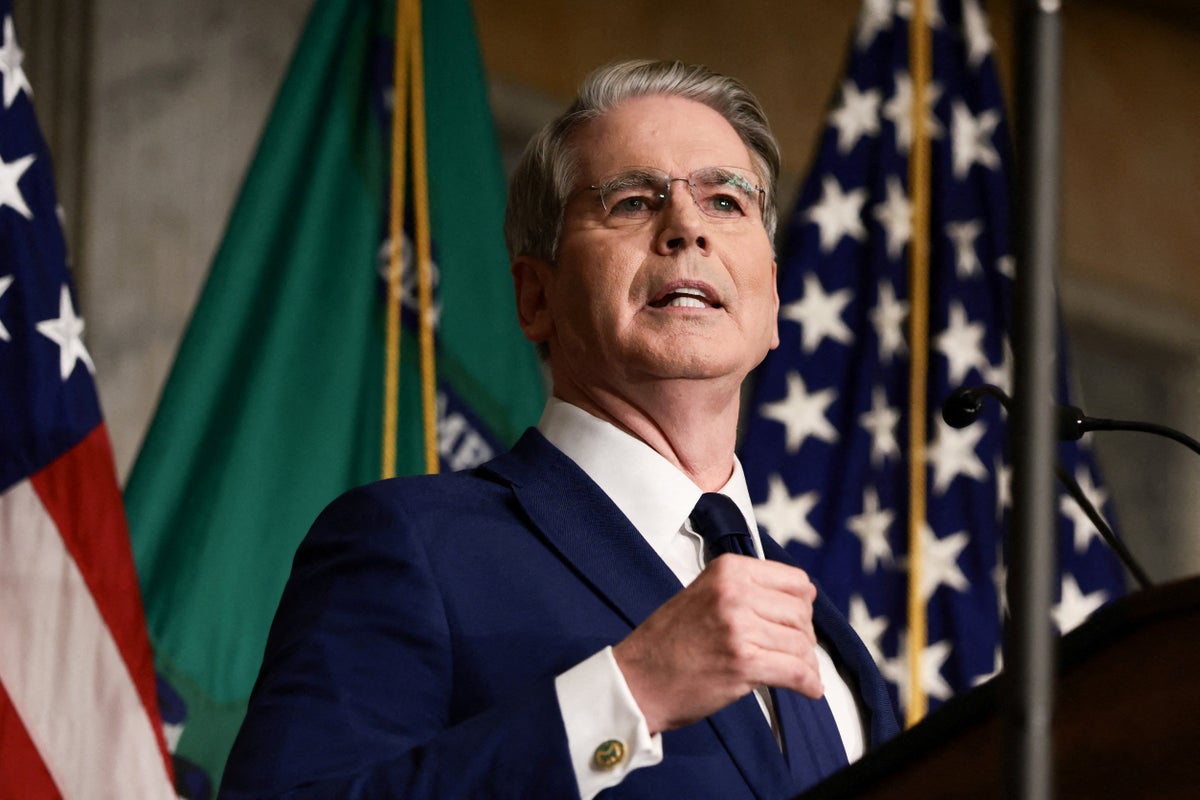
The United States Treasury Department announced a fresh wave of punitive measures against Iran on Monday, branding the effort "Operation Economic Outcast." Treasury Secretary Scott Bessent declared that nearly 60 Iran-linked entities, individuals, and vessels would be sanctioned, framing the move as "economic asphyxiation" for the Tehran regime. In a pointed warning, Bessent stated that any economic engagement with Iran — including by China, the country's largest trade partner — would expose participants to "the full reach of American power."
Iran's finance minister, Ali Madanizadeh, responded that Tehran is fully prepared to retaliate, while Beijing cautioned that the escalation would only "intensify" tensions and vowed to safeguard its interests. However, analysts have noted a gap between the rhetoric of an "economic D-Day" and the actual measures unveiled. The most severe potential steps, such as directly sanctioning major Chinese financial institutions, were not included, leading experts to characterize the announcement as a warning shot rather than a knockout blow.
The new designations sit atop a sanctions architecture that has been building since 1979. The 2015 Joint Comprehensive Plan of Action (JCPOA) offered sanctions relief in exchange for nuclear constraints, but President Trump withdrew from the deal in 2018 and reimposed a "maximum pressure" campaign targeting oil exports, banking, and the financial system. The Biden administration largely maintained those restrictions. In response, Iran has developed extensive workarounds: a "shadow fleet" of tankers moving oil illicitly, domestic production of military hardware like Shahed drones, and deepened economic ties with Russia and China.
A critical element of the latest package is the threat of secondary sanctions — penalties on third-country actors that continue doing business with Iran. Bessent did not name specific nations, saying only that President Trump was personally calling leaders to demand an immediate halt to trade with Tehran. "It's as much a warning as it is a sanctions announcement," observed Dr. Neil Quilliam, a geopolitics and energy policy specialist. This ambiguity leaves room for diplomatic maneuvering but also creates uncertainty for global markets, particularly oil, which has historically reacted to shifts in Iran sanction enforcement.
The episode echoes the 2018–2020 period when similar "maximum pressure" threats triggered temporary oil price spikes, yet Iran adapted through illicit networks and alternative partnerships. Whether the current operation represents a genuine escalation or a calibrated pressure tactic will depend on whether the administration follows through on secondary sanctions against major economies like China — a move that would carry significant global economic repercussions.