
FIFA Delays Decision on 2030 World Cup Final Host as Morocco and Spain Stake Claims
FIFA said on Thursday that the decision over whether Morocco or Spain would host the 2030 World Cup final would be made in due course
, pushing back against a declaration by the Morocco Football Federation president that the match would be played at the Grand Stade Hassan II in Casablanca—a venue still under construction.
The governing body has yet to officially announce which country will host the final. The uncertainty arrives even though the 2026 edition just finished with Spain winning the title this summer, prompting Moroccan and Spanish officials to publicly stake their claim on the next showpiece.
FIFA Maintains Official Timeline
A FIFA spokesperson told Efe news agency that, as the organization announced
on Aug. 5, the decision will be made in due course.
On that date, FIFA had already denied promising Morocco the hosting rights for the World Cup final—a tournament it will co-host with Spain and Portugal—in exchange for support for FIFA president Gianni Infantino in next March’s elections.
Morocco Asserts Final Is Locked In
Moroccan federation president Fouzi Lakjaa told a political rally on Thursday that Morocco had secured the final.
The city of Benslimane will host the World Cup final. Hate it or love it, and if anyone wants to talk on top of that, let them talk,he said.The city is Benslimane, the Hassan II stadium is the stadium, and I hope that Morocco will be playing it.
Spain Counters with Champion Status
This week, the head of the Spanish football federation, Rafael Louzán, insisted it was Spain that deserved the game, while acknowledging that the honor has not been guaranteed.
We all signed to accept the candidacy … it’s too bad that, regarding the final, it wasn’t made clear, totally clear, where it is to be played,Louzán said.Spain, as world champion both in men’s and women’s football, must host the final.
European officials believe that the sprawling, multi-nation 2030 event should be considered a European event with the final on the continent.
Centenary Format Adds Complexity
In addition to Spain, Portugal, and Morocco, Uruguay, Argentina, and Paraguay will host the opening matches for their respective national teams during the 2030 World Cup, as a tribute to the centenary of the 1930 World Cup, which was held entirely in Montevideo.
Infantino Under Pressure Amid Governance Disputes
The dispute over the final comes with Infantino under intense pressure after UEFA, the umbrella organization of European federations, led a successful revolt to scuttle his plan to sell stakes in the World Cup. By contrast, six Arab nation federations, including Morocco’s, have backed him since that fiasco.
Stadium Capacities: Morocco Offers Larger Venue
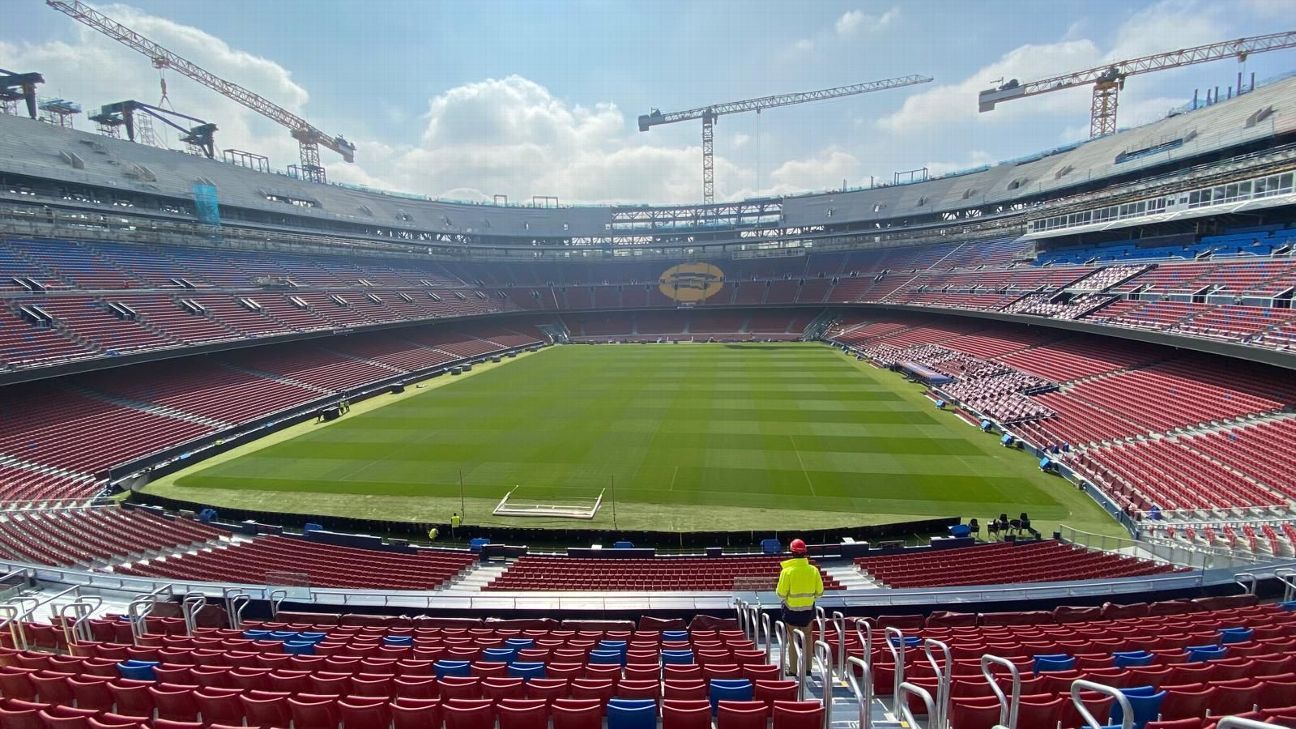
Barcelona’s Camp Nou will hold 105,000 people once renovated. The King Hassan II Stadium near Casablanca is being built in Benslimane, on the outskirts of Casablanca. It is planned to seat 115,000 spectators. Spain can offer the home stadiums of Real Madrid or Barcelona as potential sites for the final. Following its renovation, Barcelona’s Camp Nou will have a capacity of 105,000, while Madrid’s Santiago Bernabéu holds 78,297.
Diplomatic Tensions Shadow the Bid
Infantino has recently made two trips to Morocco, meeting with King Mohammed VI during annual celebrations of his ascent to the throne in July and then holding a FIFA crisis meeting there in August.
When confirmed three years ago, the joint candidacy between Spain, Portugal and Morocco looked like a perfect event to bridge Europe and Africa and strengthen bonds between the western Mediterranean neighbors. But the dispute over the final comes with diplomatic tensions between Madrid and Rabat already frayed over who was responsible when tens of thousands of mostly Moroccans driven by posts on social media pushed into the small Spanish enclave of Ceuta that borders Morocco. Spain’s prime minister said 140 people died in the crossing.
Spain’s government has been under political pressure at home to get tough on Morocco, which it has said acted in good faith in the border crisis. Spanish police assessments couldn’t rule out complicity by Moroccan security forces but said that it was unlikely the Moroccan government had intentionally orchestrated it.
Information from Efe and The Associated Press was used in this report.