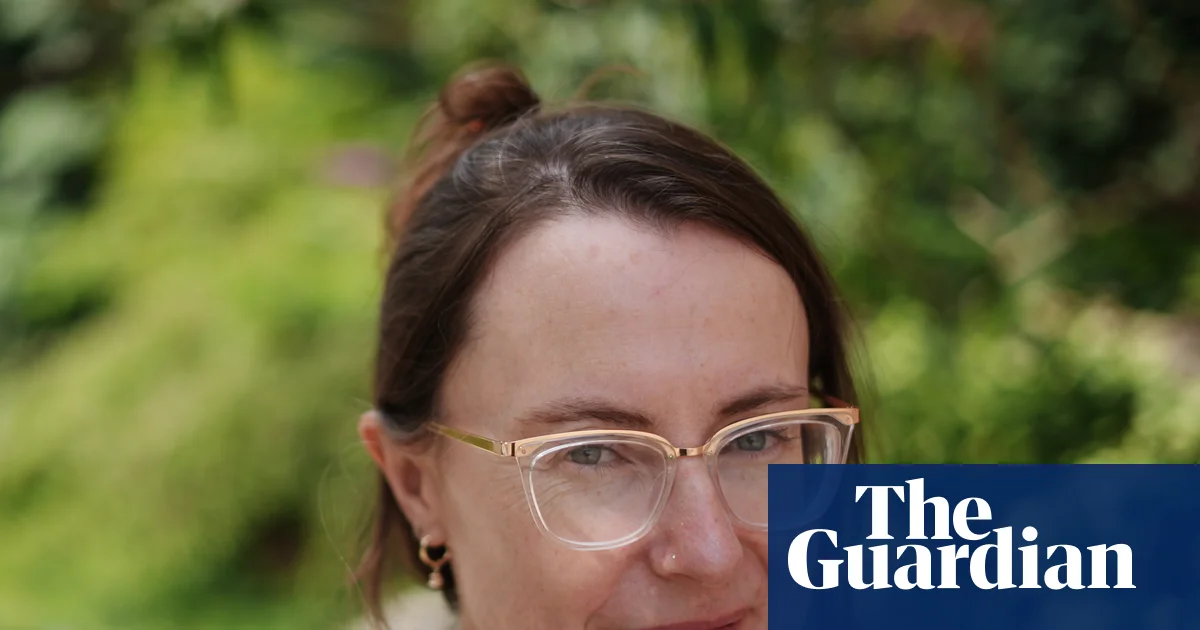
Emily Wilson, the first woman to translate Homer’s Odyssey into English, is retranslating the ancient Greek epic from scratch less than a decade after the publication of her acclaimed 2017 version.
Wilson’s new translation will take a different approach from her earlier work and is already about halfway complete. “I’m now retranslating the Odyssey from scratch, with an approach closer to that of my translation of the Iliad, using somewhat more lines than the original, enabling more varied word-length and pacing,” she told the New York Times.
“It’s a complete retranslation. It’s not a revision of the old version,” she told the AP. “I’m about halfway through.”
Why Emily Wilson is retranslating the Odyssey
Wilson’s 2017 translation became a bestseller and was widely praised for making the 3,000-year-old epic more modern and accessible. Her decision to return to Homer predates the recent controversy surrounding Christopher Nolan’s film adaptation of the poem.
In an interview recorded in the spring for the ancient-history podcast Instant Classics, Wilson discussed her wish to approach the Odyssey differently from her first translation.
“I’m proud of my Odyssey translation … I think there are lots of good things about the kinds of compression and choices that I was forced into,” Wilson said then.
She has indicated that she will “probably” keep the opening line, “Tell me about a complicated man”. Wilson also said her original translation relied too heavily on the word “slave”, arguing that more precise terminology could better reflect the different forms of enslavement depicted in the poem.
The new edition will include substantially more of Wilson’s scholarly commentary. “I’m also going to quadruple the number of endnotes because endnotes are really fun to write,” she said.
Wilson’s criticism of Christopher Nolan’s Odyssey film
The announcement follows Wilson’s highly publicised criticism of Nolan’s blockbuster adaptation, which was released in July this year and stars Tom Holland, Zendaya, Matt Damon and Anne Hathaway.
Nolan cited Wilson’s 2017 translation, including its opening sentence, “Tell me about a complicated man”, as an influence on his adaptation. The film made $264m (£196m) during its opening weekend, giving Nolan his best-ever opening and taking the global box office by storm.
The film also triggered a sharp rise in sales of Homer’s poem. UK print sales increased by 1,400% in the four weeks to 25 July compared with the same period in 2025, following the film’s release in the middle of the month.
Writing in the London Review of Books, Wilson said: “Nolan’s Odyssey lacks many of the elements that make the poem great … The writing is abysmal.”
She continued: “None of the characters has convincing motivation for their actions or words. There are no sex scenes, and all the food looks horrible,” adding, “I would be ashamed to have written any part of this script.”
Her comments prompted strong reactions, including from novelist Joyce Carol Oates, who accused Wilson of “haughty superiority”.
A long tradition of translators revisiting their work
Although retranslating one’s own version of a major literary work is unusual, it has historical precedent.
“Translators quite often rework or rewrite their own previous translations,” said Matthew Reynolds, professor of English and comparative criticism at Oxford University. “Elizabeth Barrett Browning completely rewrote her translation of Aeschylus’s Prometheus Bound, Ezra Pound repeatedly revised his translations of Guido Cavalcanti, and Yu JongHo (유 종호) translated Jane Eyre into Korean first in 1970 and again in 2004.”
He added: “It shows that translation – especially literary translation – is not just a matter of right or wrong, good or bad, but a continual exploratory process of interpretive reimagining and re-making.”
Wilson’s new translation of the Odyssey does not yet have a publication date.