
Key Highlights
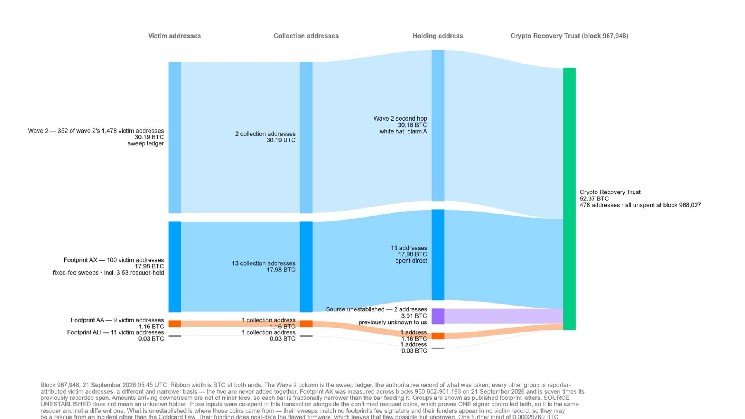
- Ethical hackers transferred 52.37 BTC to a newly formed recovery trust address as part of remediation efforts from the July Coldcard hardware wallet exploit.
- The multi-wave attack, beginning July 30, exploited a firmware vulnerability that forced wallets to use a weaker software-based random number generator, exposing over $100 million in bitcoin.
- Coinkite has patched the firmware, but funds derived from compromised seeds remain at risk regardless of the update.
Whitehat Operators Secure 52.37 BTC in Coldcard Recovery Effort
“Whitehat operators” have moved 52.37 BTC to an address linked to a newly formed recovery trust, according to Galaxy Digital’s Head of Research Alex Thorn. The transfer represents a significant development in the ongoing fallout from July’s Coldcard hardware wallet exploit, which began on July 30 and unfolded across multiple attack waves—designated as waves 1, 2, and 3—in subsequent days. Estimated losses from the incident have surpassed $100 million in bitcoin.
Firmware Vulnerability Enabled Seed Reconstruction
The attack exploited a critical weakness in the Coldcard’s firmware implementation. Attackers manipulated affected devices into generating wallet seeds using a weaker software-based random number source instead of the wallet’s dedicated hardware random number generator. This deviation made a subset of seeds vulnerable to reconstruction by malicious actors, effectively compromising the cryptographic foundation of the affected wallets. Coinkite, the manufacturer of Coldcard, has since released a firmware patch to address the vulnerability.
Patched Firmware Does Not Secure Previously Exposed Funds
Despite the availability of a firmware update, Coinkite has clarified that funds already exposed under the old, compromised seeds remain at risk regardless of the patch. The cryptographic weakness pertains to the seed generation process itself; once a seed has been generated using the flawed entropy source, updating the device firmware cannot retroactively secure the private keys derived from that seed. This distinction leaves a significant volume of bitcoin vulnerable to potential theft unless proactive measures are taken.
Ethical Hackers Intervene to Protect At-Risk Assets
According to Thorn, not all funds moved from victim wallets were taken by malicious actors. A portion was swept by “good guys”—ethical cybersecurity professionals who use hacking skills to identify and remediate security weaknesses. These whitehat operators intervened specifically to remove the at-risk bitcoin from vulnerable addresses and place them into secure custody within the recovery trust, preserving the assets until they can be safely returned to their rightful owners.
Why This Matters
The Coldcard exploit underscores a persistent risk in the hardware wallet sector: implementation flaws in entropy generation can undermine the air-gapped security model that cold storage devices promise. While Coinkite’s patch prevents future seed generations from being compromised, the incident highlights the irreversible nature of seed exposure—once a mnemonic phrase is generated with insufficient entropy, the resulting private keys are permanently weakened. The formation of a recovery trust and the active participation of whitehat operators represent an emerging cooperative defense model in the bitcoin ecosystem, where ethical researchers race against malicious actors to secure funds derived from known cryptographic weaknesses. The situation remains fluid, with the total scope of affected addresses and the ultimate recoverability of swept funds still unfolding.
Frequently Asked Questions
- How many bitcoin were moved to the recovery trust by whitehat operators?
- 52.37 BTC were transferred to an address linked to a newly formed recovery trust as part of the remediation effort.
- Does updating Coldcard firmware protect funds from seeds generated before the patch?
- No. Coinkite has stated that funds exposed under the old, compromised seeds remain at risk regardless of the firmware update, because the vulnerability lies in the seed generation process itself, not in the device’s ongoing operation.
- What caused the Coldcard wallet seeds to be vulnerable?
- The exploit forced affected wallets to generate seeds using a weaker software-based random number source instead of the dedicated hardware random number generator, making those seeds susceptible to reconstruction by attackers.