Key Highlights
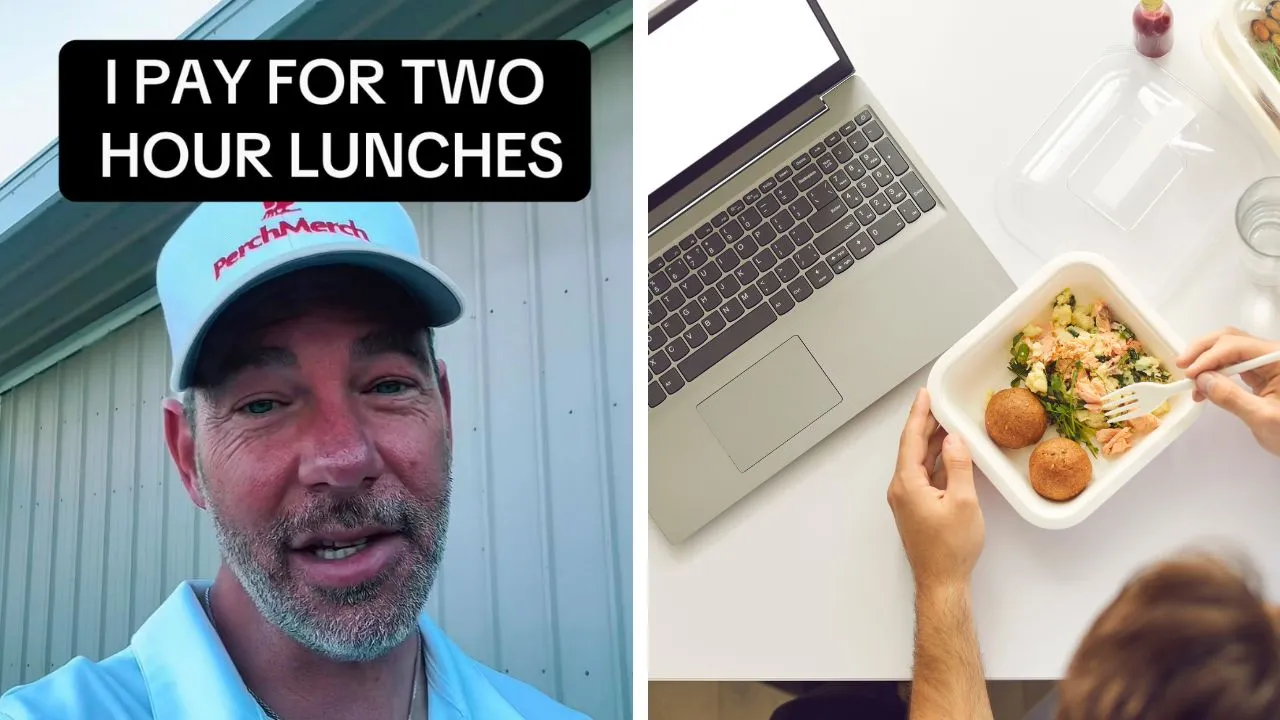
- TikTok creator Zero Dollar Coach went viral advocating for unlimited paid lunch breaks — up to two hours — provided employees complete their work and don’t burden teammates.
- The business owner argues companies that strictly time lunch breaks while ignoring unpaid overtime, shortened breaks, or after-hours work are applying a double standard.
- The video amassed 312,000 likes and sparked widespread debate, with healthcare workers and other commenters contrasting the policy against rigid 30-minute breaks on 12-hour shifts.
Viral Management Philosophy Challenges Conventional Break Policies
A TikTok creator known as Zero Dollar Coach has ignited a widespread conversation about workplace autonomy after sharing his unconventional lunch-break policy. In a video that had garnered 312,000 likes as of publication, the business owner stated plainly: “I don’t care how long of a lunch my employees take.” His only conditions: the work must get done, customers must be taken care of, and the employee’s absence cannot negatively impact the rest of the team.
The creator, who identifies as a boss and business owner, explained that his employees receive paid lunch breaks and that he does not use a stopwatch to monitor their time away. He cited real-world examples from his workplace, such as an employee spending an extended lunch with a visiting relative or taking extra time after a difficult morning. According to him, the system balances out naturally: someone who takes a two-hour lunch one day might eat at their desk, skip lunch entirely, or stay late to handle time-sensitive tasks on another.
Critique of Asymmetric Time Tracking
Zero Dollar Coach directed pointed criticism at organizations that rigorously police lunch durations while overlooking the extra time employees routinely contribute. He argued that companies tracking every minute of a long lunch should equally account for every minute employees give back — through shorter breaks, work-related phone calls during meals, or staying past their scheduled hours.
“You don’t get to count every minute an employee takes from you and completely ignore every minute they give back,” he said. His framework shifts the focus from input-based metrics — how long someone sits at a desk or eats a sandwich — to outcome-based measures: completed work, satisfied customers, and fair distribution of labor among colleagues.
Summarizing his philosophy, he added: “If the work gets done and the customers are taken care of and you’re not screwing over the rest of the team, I genuinely do not care how long it took you to eat a sandwich.”
Public Response Highlights Industry Divides
The video drew thousands of comments, many expressing a strong preference for managers who grant such autonomy. One commenter wrote: “Treat adults like adults, and you get an adult,” while another noted their most productive employees were those they treated “like adult humans.”
However, the discussion also exposed sharp contrasts across industries. Numerous healthcare workers responded that they receive only 30-minute lunch breaks during 12-hour shifts and are sometimes prevented from taking even those. Others raised practical concerns about coverage in roles where team members depend on one another to maintain operations. Zero Dollar Coach acknowledged these coverage issues as valid and stated he would address any individual who misused the flexibility rather than imposing blanket restrictions on the entire staff.
Why This Matters
The viral moment reflects a growing tension between traditional, time-based management models and emerging expectations for trust-based, results-oriented workplaces. As labor markets tighten and younger workers prioritize autonomy, policies like Zero Dollar Coach’s serve as a litmus test for organizational culture. The stark contrast with sectors like healthcare — where rigid scheduling is often dictated by regulatory and patient-safety requirements — underscores that “flexibility” is not universally feasible. However, even in constrained environments, the core principle — accounting for total employee contribution rather than isolated time increments — offers a framework for rethinking fairness in labor practices. The conversation is likely to influence ongoing debates about work-life balance, productivity measurement, and the future of hourly versus salaried compensation structures.
Frequently Asked Questions
- Who is Zero Dollar Coach?
- Zero Dollar Coach is a TikTok creator and business owner who shares management and leadership advice. His real name is not disclosed in the source article.
- What is his exact lunch-break policy?
- Employees may take paid lunch breaks of any length — up to two hours or more — as long as their work is completed, customers are served, and their absence does not burden coworkers. No stopwatch or time-tracking is used.
- How did viewers react to the video?
- The video received 312,000 likes and thousands of comments. Many praised the autonomy and said they would prefer working under such a policy. Some, particularly healthcare workers, contrasted it with their own rigid 30-minute breaks on 12-hour shifts. Others raised concerns about coverage in team-dependent roles, which the creator acknowledged and said he would handle case by case.