Key Highlights
- The SEC’s five-year innovation exemption establishes a regulatory pathway for tokenized U.S. stocks to trade via automated market makers on public blockchains, requiring preservation of shareholder rights including dividends and voting.
- Goldman Sachs and Citizens analysts identify Coinbase as a primary beneficiary due to its existing tokenized-equity offering, institutional custody business, Coinbase Tokenize infrastructure, and Base blockchain ecosystem.
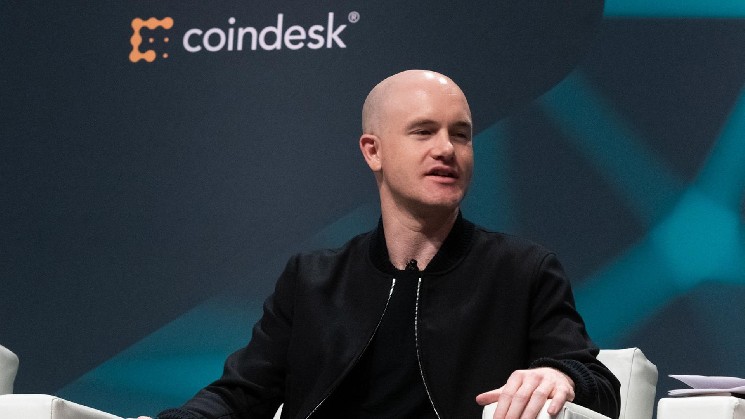
- Coinbase CEO Brian Armstrong confirmed voting rights for token holders are “coming soon,” addressing a key requirement for parity with traditional shareholders.
SEC Innovation Exemption Creates Onchain Pathway for U.S. Equities
The U.S. Securities and Exchange Commission has unveiled a five-year innovation exemption that carves out a regulated framework for tokenized U.S. stocks to trade through automated market makers on public blockchains. The exemption mandates that tokens preserve core shareholder rights—specifically dividends and voting—while imposing constraints on trading venues, including limits on trading volume and the number of stocks they may offer. This targeted experiment signals a cautious but concrete step toward integrating traditional securities with decentralized market infrastructure.
Goldman Sachs and Citizens Pinpoint Coinbase as Multi-Vector Beneficiary
Analysts at Goldman Sachs project that Coinbase stands to benefit across multiple business lines as the tokenized-equity landscape matures. The firm’s existing tokenized-equity offering already aligns with many SEC requirements, featuring shareholder rights and dividends comparable to the underlying shares. Complementing this, Coinbase operates an institutional custody business and Coinbase Tokenize, a dedicated infrastructure service that enables other firms to bring assets onchain. Citizens analysts echoed this view, emphasizing Coinbase’s sprawling reach across custody, tokenized assets, stablecoins, and its Ethereum Layer 2 network, Base.
Armstrong Confirms Voting Rights Rollout Imminent
A critical piece of the compliance puzzle fell into place this week when Coinbase CEO Brian Armstrong stated that voting rights for token holders are “coming soon.” This development would bring tokenized-equity holders to functional parity with investors in the underlying shares, satisfying a core condition of the SEC’s exemption. The announcement underscores Coinbase’s proactive approach to meeting regulatory expectations ahead of broader market adoption.
Robinhood and Circle Also Positioned for Upside
While Coinbase commands the most detailed analyst coverage, the exemption’s ripple effects extend to other major players. Robinhood and Circle are cited as potential beneficiaries should the scope of tokenized U.S. securities expand beyond the current narrow pilot. Both firms possess the retail distribution, brokerage infrastructure, and stablecoin capabilities—particularly Circle’s USDC—that could prove pivotal in a scaled onchain equities market.
Why This Matters
The SEC’s innovation exemption represents the first formal U.S. regulatory acknowledgment that public blockchains can serve as legitimate venues for securities trading, albeit within strict guardrails. By requiring automated market makers to uphold dividend and voting rights, the regulator is attempting to bridge the investor-protection gap that has historically stalled tokenization efforts. For market participants, the five-year window offers a defined period to build compliant infrastructure, demonstrate demand, and lobby for permanent rulemaking. The involvement of custodians like Coinbase and stablecoin issuers like Circle suggests the emerging stack—custody, settlement, tokenization, and liquidity—is coalescing around a handful of regulated entities. Analysts will be watching trading-volume caps and stock-count limits closely; if these constraints bind quickly, pressure for legislative or rule-based expansion will intensify.
Frequently Asked Questions
What specific shareholder rights must tokenized stocks preserve under the SEC exemption?
The exemption requires that tokenized stocks maintain dividends and voting rights equivalent to those of the underlying traditional shares.
Which Coinbase business lines do analysts highlight as relevant to the tokenized-equity opportunity?
Goldman Sachs and Citizens point to Coinbase’s existing tokenized-equity offering, institutional custody business, Coinbase Tokenize infrastructure platform, stablecoin operations, and the Base Layer 2 blockchain as key growth vectors.
Are Robinhood and Circle expected to benefit immediately from the exemption?
Analysts describe the current experiment as narrow, but note that Robinhood and Circle are well-positioned to benefit if the program expands to include more U.S. securities onchain.