Key Highlights
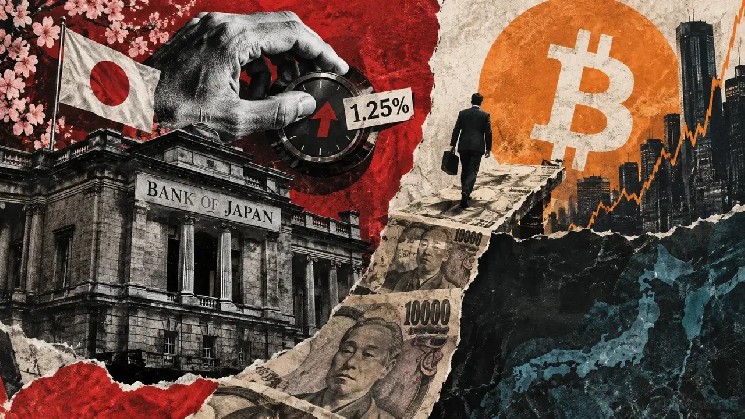
- The Bank of Japan raised its policy rate by 25 basis points to approximately 1.25% on September 18, with the new target taking effect September 24.
- Bitcoin traded orderly following the announcement, rising from $76,961 to over $81,000 intraday, while the yen weakened 1.2% against the dollar—contrary to a classic carry-unwind pattern.
- The BOJ signaled financial conditions will remain accommodative and tied further hikes to economic and inflation outlook rather than a fixed timetable, leaving longer-term risk open.
BOJ Delivers Rate Hike as Markets Monitor Yen-Carry Dynamics
The Bank of Japan voted 7-2 on September 18 to lift its target for the uncollateralized overnight call rate from about 1% to about 1.25%, marking a continuation of its gradual normalization cycle. The new target and related facility rates take effect September 24, meaning the policy path shifted before the official operating rates changed. This separation allows market positions to adjust ahead of implementation, and the BOJ’s next policy signal may prove as consequential as the September 24 effective date because the central bank explicitly tied further increases to its economic and inflation outlook rather than a predetermined schedule.
Bitcoin Reaction Remains Orderly Amid Yen Weakness
At the BOJ’s 02:54 UTC release time, Coinbase one-minute data recorded Bitcoin’s closing price at $76,961. By 03:30 UTC, the one-minute close stood at $77,383, with the cryptocurrency continuing to climb throughout the session to an intraday high of $81,000. The currency move simultaneously ran counter to the simplest carry-unwind pattern. Reuters reported that during BOJ Governor Kazuo Ueda’s press conference, the dollar climbed to a two-week high of 157.84 yen, leaving the Japanese currency 1.2% weaker on the day. A visible synchronized unwind would more typically pair rapid yen appreciation with falling risk assets.
Yen Funding One Channel Among Several for Crypto
The available evidence leaves the amount of Bitcoin exposure financed in yen unquantified. Coinbase Institutional’s review of the 2024 carry episode identified several simultaneous catalysts, including weak U.S. economic data and pressure on technology stocks. Yen funding represents one transmission channel among several that can shape crypto market moves. The initial reaction points to limited immediate unwind pressure in observed markets, though longer-term risk remains open as the new rate takes effect and the BOJ considers its next steps.
Why This Matters
The BOJ’s decision arrives at a critical juncture for global liquidity and risk-asset positioning. Yen-funded carry trades have historically amplified volatility across asset classes when Japanese rates rise or the yen appreciates sharply. The central bank’s explicit conditioning of future hikes on realized economic and inflation outcomes—rather than a mechanical calendar—introduces a layer of policy uncertainty that markets must price incrementally. For cryptocurrency markets, the orderly Bitcoin response suggests current positioning is less vulnerable to an immediate, disorderly unwind than some analysts feared. However, the diagnostic warning signs remain clear: sharp yen appreciation concurrent with declining crypto and equity prices, or a fresh BOJ signal indicating tighter policy sooner than consensus expects, could rapidly alter the risk calculus. The September 24 implementation date serves as the next tangible milestone, but the evolving outlook guidance from Governor Ueda and the BOJ board will likely drive the narrative in the weeks ahead.
Frequently Asked Questions
Did the BOJ rate hike trigger a Bitcoin sell-off?
No. Bitcoin rose from $76,961 at the time of the announcement to an intraday high of $81,000, indicating an orderly market response rather than a forced unwind of yen-funded positions.
Why did the yen weaken instead of strengthen after the rate increase?
The dollar climbed to a two-week high of 157.84 yen during Governor Ueda’s press conference, leaving the yen 1.2% weaker on the day. This suggests markets interpreted the BOJ’s forward guidance as sufficiently dovish—emphasizing accommodative conditions and data-dependent future hikes—to offset the immediate rate increase.
What are the key signals to watch for potential carry-unwind risk ahead?
Analysts highlight two primary warning signs: a sharp appreciation of the yen accompanied by simultaneous declines in crypto and equity markets, or a new BOJ communication indicating that policy tightening will resume sooner than markets currently anticipate.