Key Highlights
- Documentary “You Had to Be There” traces the lineage of modern comedy icons like Martin Short, Eugene Levy, Gilda Radner, and Paul Shaffer back to the 1972 Toronto production of Godspell.
- With no video footage of the original 14-month theatrical run, director Nick Davis uses candid interviews and era-specific animation to reconstruct this pivotal cultural moment.
- The film balances celebratory nostalgia with serious revelations, including actress Avril Chown’s account of post-production abuse, asking: “How much blood do you want to give for something you love?”
The Toronto Godspell: Comedy’s Unexpected Big Bang
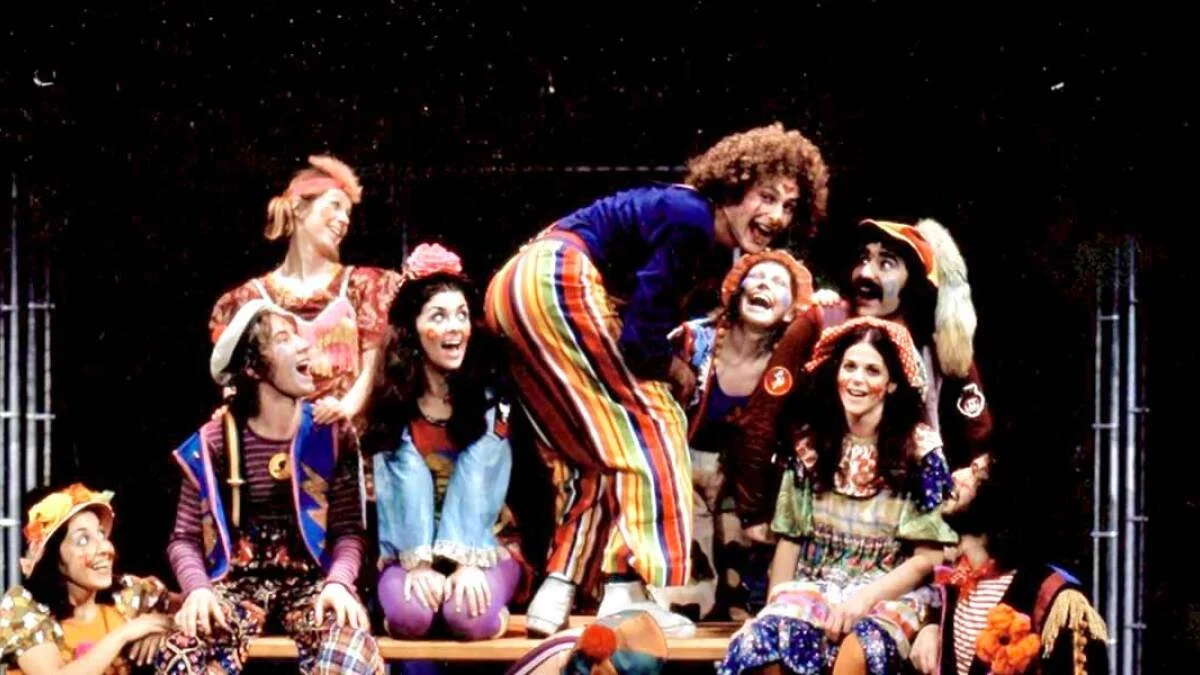
It is a staggering genealogical fact: the creative DNA of Saturday Night Live, SCTV, Schitt’s Creek, and Only Murders in the Building can all be traced to a single, unrecorded theatrical production in 1972 Toronto. Stephen Schwartz and John-Michael Tebelak’s Godspell—a clown-inflected, parable-driven musical depiction of the Gospels—assembled a cast of unknown twenty-somethings who would collectively redraw the map of North American comedy. That ensemble included Martin Short, Eugene Levy, Gilda Radner, Victor Garber, Andrea Martin, Dave Thomas, Jayne Eastwood, and Paul Shaffer. Over a legendary 14-month run that was both raved about and protested in equal measure, not a single frame of video was captured for posterity. Fifty-three years later, documentarian Nick Davis attempts to resurrect that vanished world with the preposterously and perfectly titled You Had to Be There: How the Toronto Godspell Ignited the Comedy Revolution, Spread Love & Overalls, and Created a Community That Changed the World (in a Canadian Kind of Way).
Reconstructing a Phantom Production
Faced with a dismaying dearth of archival footage, Davis deploys a two-pronged strategy. The film’s backbone is a remarkable roster of first-hand witnesses. Davis secures interviews with nearly the entire surviving principal cast—Short, Levy, Thomas, Garber, Martin, Eastwood, Shaffer, Avril Chown, Don Scardino, Valda Aviks, and Rudy Webb. Now largely in their 70s, these legends possess a refreshing “give-no-fucks” candor, looking back with fondness and unvarnished honesty to a moment when, as the film conveys, everything felt possible—and vaguely terrifying because of it. Martin Short, who detailed much of this history in his memoir I Must Say: My Life as a Humble Comedy Legend, proves an especially vibrant narrator, aided by his lifelong habit of meticulous record-keeping.
The documentary’s greatest structural pleasure arrives when Davis cuts rapidly between individual interviews, simulating the sensation of eavesdropping on a dinner party hosted by the coolest people on the planet—recounting a party the viewer wasn’t invited to. It is enchanting and bittersweet, particularly when the conversation turns to absent friends, most notably Gilda Radner. Her peers remember her “warts and all, but warmly,” emphasizing that even amid struggles with disordered eating and terminal cancer, she remained a light for those around her. As the film notes, for a more complicated portrait of Radner, one should read Andrea Martin’s book, as the two dated for years and remained close for decades after.
Animation as Time Machine
To visualize the unfilmable past, Davis employs animation styled after 1970s touchstones like Schoolhouse Rock! and Scooby-Doo. This aesthetic choice does more than fill gaps; it emotionally and artistically tethers the viewer to the era’s sense of free-love optimism and creative moxie. Animators painstakingly recreated the production’s distinctive costumes from promotional photos and rendered caricatures of the twentysomething theater kids. The technique pays comedic dividends: a story about producers panicking over Eugene Levy’s chest hair—fearing a hirsute Jesus would offend 1972 Toronto’s stuffy sensibilities—is delivered as a masterclass in comic timing, with Short giddy and Levy wry, building to a “sensationally silly punchline” illustrated by the cartoon.
Beyond the Laughter: A Counterbalance of Trauma
You Had to Be There refuses to be a mere nostalgia trip. Davis gives significant screen time to Avril Chown, who uses the platform to finally share a harrowing story of abuse that occurred after the cast took their final bow. Before recounting her experience, she poses a question that reframes the entire enterprise: “How much blood do you want to give for something you love?” Rather than feeling exploitative or tangential, this sequence provides a necessary counterweight to the convivial showbiz anecdotes. It serves as a stark reminder that the clowns who make us laugh often carry profound private wounds, and to sanitize their stories would be to betray the risk-taking that built their legacies.
Legacy Voices and a Final Revelation
To contextualize the Godspell alumni’s outsized influence, Davis recruits a “legacy panel” of admirers including Lin-Manuel Miranda, Janeane Garofalo, Heidi Gardner, and Mike Myers. These talking heads efficiently draw the line from 1972 Toronto to the present day without derailing the intimate core narrative. The film builds to a stunning climax: the unveiling of a long-lost clip of one song’s performance. The audience gasps in unison with the on-screen subjects, a shared moment of recovery that validates the film’s central thesis. Simply put, You Had to Be There gifts audiences plenty of laughs and so much more—an informative, historical, entertaining, and deeply humane portrait that makes the viewer feel like they were there, and that these icons are their friends, too.
Why This Matters
The 1972 Toronto Godspell represents a rare, documented “Big Bang” event in cultural history—a singular incubator that produced a disproportionate share of the architects of modern comedy. Understanding this lineage reframes how we view the evolution of sketch comedy, musical theater integration, and the “ensemble ethos” that defines institutions like SNL and SCTV. The documentary’s theatrical release (opening in New York on September 18 and nationwide September 25, 2026, following its 2025 TIFF world premiere) arrives at a moment when the industry is reckoning with the preservation of ephemeral live performance and the often-hidden human costs of creative careers. By restoring the “missing link” of this production, Davis not only satisfies comedy nerds but provides a vital case study in how countercultural communities form, fracture, and endure.
Frequently Asked Questions
Who was in the original 1972 Toronto Godspell cast?
The principal cast included Martin Short, Eugene Levy, Gilda Radner, Victor Garber, Andrea Martin, Dave Thomas, Jayne Eastwood, Paul Shaffer, Avril Chown, Don Scardino, Valda Aviks, and Rudy Webb. Nearly all went on to defining careers in comedy, theater, and music.
Why is there no video footage of the original production?
Despite its 14-month run, the production was never video recorded for posterity—a fact the documentary highlights as a staggering loss to cultural history. Director Nick Davis relies on animation and interviews to reconstruct the experience.
When and where can I watch You Had to Be There?
The documentary opens in New York theaters on September 18, 2026, and expands nationwide on September 25, 2026. It previously premiered at the 2025 Toronto International Film Festival.