McLaren Formula 1 team principal Andrea Stella has identified the Madring circuit layout as the primary factor preventing Lando Norris from converting pole position into victory at the Spanish Grand Prix. Despite a dominant early pace, Norris fell victim to a poorly timed virtual safety car and, ultimately, a track design that offered virtually no overtaking opportunities.
Virtual Safety Car Timing Undermines Norris Lead
Norris started from pole at Madrid’s new street circuit and immediately built a six-second advantage over the opening 12 laps. That margin, however, became a liability when the virtual safety car (VSC) was deployed. Because Norris was too far ahead to pit without losing track position, he stayed out while rivals stopped.
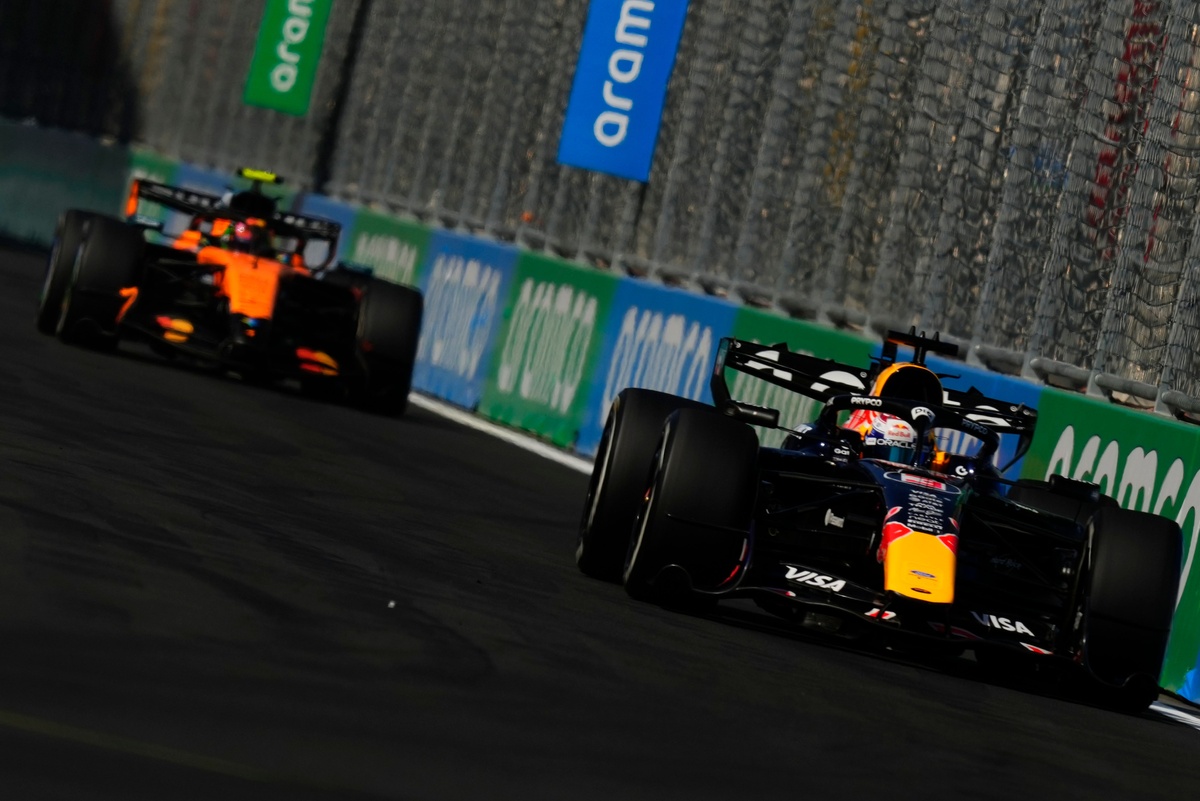
When Norris eventually pitted, a seven-second tire change dropped him 16 seconds behind Kimi Antonelli. Although the British driver slashed that deficit to challenge Antonelli and Max Verstappen for the lead by lap 48, he was unable to execute a pass.
Stella: Slow Pit Stop Did Not Cost the Win
Stella dismissed the idea that the sluggish stop altered the race outcome, emphasizing the circuit’s fundamental limitations.
“Because probably Lando would have [come out] anyhow behind [George] Russell,” he pointed out. “And even if not, it would have not been possible to overtake Verstappen and Antonelli.
“So, definitely, we take note that there’s a lot of work to do in our operation. And it’s not the first time that we have a slow stop. But in terms of the race itself, it didn’t make a difference.”
The McLaren boss acknowledged the recurring operational issue but insisted the track layout rendered the pit-stop delay irrelevant to the final result.
Madring Produces Fewest Overtakes of 2026 Season
Data from Sunday’s race supports Stella’s assessment. The event featured just 10 overtaking moves—the lowest total of the 2026 campaign so far, even fewer than the 11 recorded at the traditionally processional Monaco Grand Prix. Four of those 10 passes involved backmarkers Valtteri Bottas or Lance Stroll being overtaken at the rear of the field.
Turn 5 Geometry Blocks Overtaking Attempts
The circuit’s primary passing zone, the heavy braking area at Turn 5, proved ineffective. The corner follows a curve that complicates braking precision, and its narrow width prevents two cars from entering side-by-side.
“When it comes to overtaking, it’s a shame that it’s so difficult,” Stella added. “It just requires a large, large lap time difference to be able to overtake. I think what F1 will have to review is whether there are some modifications required at this circuit in order to introduce an overtaking possibility.
“Because at the moment, the fact is that the straight may be long enough, but there’s absolutely no way that two cars can enter [Turn] 5 together. So it’s basically impossible an attempt of overtaking – which is a bit of a shame, because I think if overtaking was possible today, we would have [had] Lando regaining the lead, because the pace advantage was significant.”
Circuit Modifications Under Consideration
Stella’s remarks place the onus on Formula 1 and the circuit promoters to evaluate layout changes for future editions. With a straight that theoretically supports slipstreaming but a choke point that negates side-by-side racing, the Madring in its current configuration prioritizes track position over race craft—a dynamic that turned a potential Norris masterclass into a strategic dead end.