Sunderland Return to European Stage After 53-Year Absence
When Sunderland last competed in European football, club directors viewed the campaign as a practical way to fund floodlight upgrades at Roker Park. The improvements were necessitated by England’s widespread adoption of colour television, which rendered the existing black-and-white broadcasting system outdated.
Historical Context: The 1973 Campaign
In the autumn of 1973, Sunderland doubled admission prices for the second leg of their European Cup Winners’ Cup opener against Vasas of Budapest. The decision came amid long-running industrial action by miners and railway workers, leaving north-easterners’ finances tight. Consequently, a disappointing crowd of under 23,000 watched Dennis Tueart’s penalty secure a 3-0 aggregate win.
New Era at the Stadium of Light
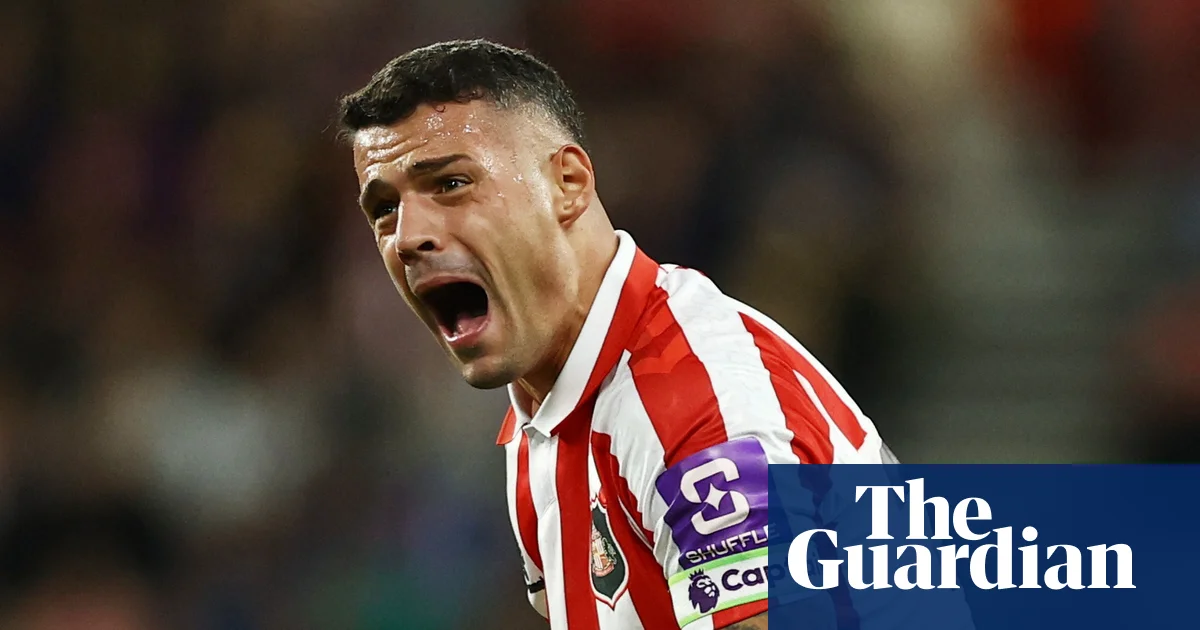
Fifty-three years later, Wearside’s financial outlook remains uncertain as the gig economy erodes job security and the cost of living spirals. Yet a near 49,000-capacity crowd is expected at the Stadium of Light on Wednesday night for Sunderland’s opening Europa League match against AZ Alkmaar. The fixture will be televised globally in HD, but if captain Granit Xhaka has his way, viewers may need to adjust their brightness controls.
“The stadium will be on fire,” says Sunderland’s captain, who at Arsenal and Bayer Leverkusen played in two Europa League finals, losing twice. “And I want to see our players on fire, on and off the ball. I’ve always been a dreamer and, for me, it’s a big, big dream to reach another European final and to get it with this club.”
Xhaka’s Decision to Stay
This opportunity is one reason the 33-year-old Switzerland midfielder resisted overtures from his old friend Xabi Alonso to join Chelsea this summer. Four months ago, after Sunderland coincidentally beat Chelsea at the Stadium of Light to secure a seventh-place Premier League finish and only the second European adventure in club history, Xhaka grabbed a microphone and declared:
“This is just the beginning; we want more.”
Now Régis Le Bris’s side must balance the notoriously tricky demands of a second top-tier season following promotion with the glamour of a competition that in December will transport them to San Siro. The fixture has forced Newcastle fans to retire an oft-repeated chant declaring: “You’ll never see a Mackem in Milan.” T-shirts emblazoned with the jubilant message “Mackem in Milan” are fast becoming a staple of Sunderland supporters’ wardrobes.
Facing a Free-Scoring AZ Alkmaar
First, they must overcome an AZ side who have won five and drawn one of their opening Eredivisie matches. Xhaka may well find himself up against Kees Smit, a 20-year-old widely regarded as among Europe’s most promising young midfielders.
In 1973-74, Sunderland were European underdogs—a Second Division team unexpectedly engaged in continental combat thanks to a famous FA Cup final triumph against Leeds. Le Bris’s class of 2024-25 do not want to be seen as almost accidental tourists.
“It’s a privilege to be here,” says Sunderland’s French manager. “I’m proud but we’ve earned it, the players worked very hard last season. Now we have a good opportunity and it’s important to go all in.
“We want to be strong in both the Premier League and Europe. The players are looking forward to facing AZ; they’re excited. They want to be involved in this competition.”
Long Journey for Le Bris and Le Fée
If Le Bris and his playmaker Enzo Le Fée have travelled a long way since the moment 14 years ago when Sunderland’s manager, then a lowly academy coach in Brittany at Lorient, began working with the 12-year-old Le Fée, so too has that pair’s adopted home.
Five years ago, Luke O’Nien was playing for Sunderland in League One, facing teams such as Accrington Stanley and Fleetwood. On Wednesday night he will be part of Le Bris’s matchday squad, offering living, breathing proof of the club’s astonishing rebirth under the transformative majority ownership of Kyril Louis-Dreyfus.
Contrasting Fortunes from 1973
Whereas 53 years ago the Cup Winners’ Cup campaign coincided with the break-up of Bob Stokoe’s Wembley heroes of 1973 and concluded with a narrow aggregate defeat at the hands of Sunderland’s second opponents, Sporting, Louis-Dreyfus intends this to be the first of many European adventures. Certainly Le Bris’s squad seem much better prepared than those members of the Roker Park board who, as club historian Rob Mason details in his excellent Sunderland AFC: The Definitive History, were victims of pickpocketing on that trip to Lisbon.
European Experience in the Squad
It helps that Nordi Mukiele, Reinildo, Omar Alderete, Noah Sadiki, Le Fée, Brian Brobbey and Xhaka constitute a raft of players with previous European experience. The captain is confident the collective mindset is attuned correctly.
“To succeed in Europe you need energy in the dressing room,” says Xhaka. “And that is what we have. The first step I took in the dressing room last season, I had a very good feeling. I could smell that it was special.
“So the energy, the mindset is there. If you don’t have this desire, this hunger, this mentality to compete every single day, forget about this level. But this team has it and, game by game, this team will show it. You need luck but I’m very positive and optimistic that we can go very far in this competition.
“The energy, the connectivity, the togetherness in our dressing room is amazing. I’m grateful that I’m here.”