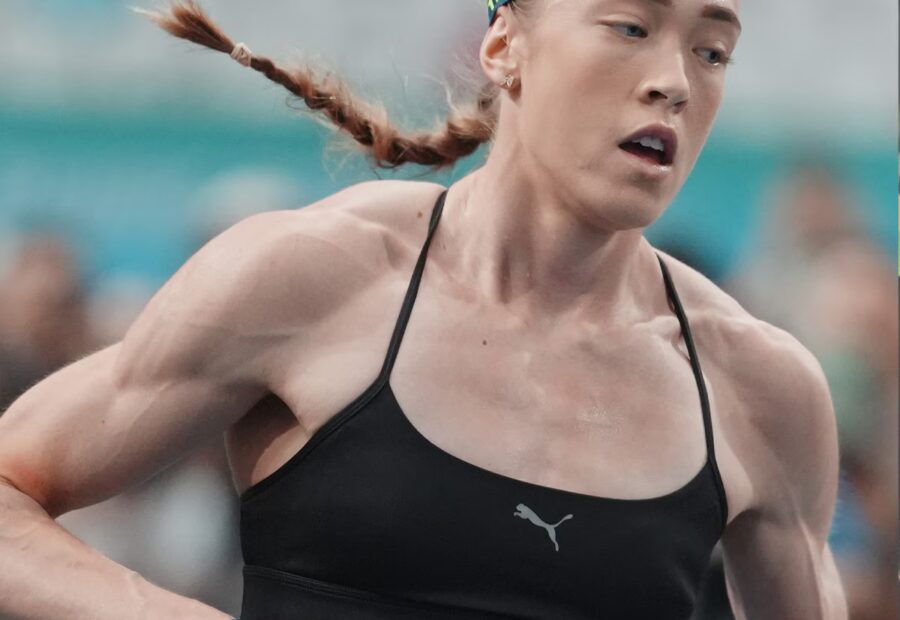
Joanna Wietrzyk’s Viral Hyrox Incident Highlights Prevalence of Faecal Incontinence in Elite Sport
Hyrox world record holder Joanna Wietrzyk became a global talking point this week after soiling herself during an elite event in Beijing. Organisers later apologised to those affected “directly or indirectly” by the incident, which saw faeces smeared across communal equipment. Yet Wietrzyk herself appeared remarkably unruffled. She not only continued to win the race, but in her only public statement — a since-deleted social media post — she simply wrote:
“Go hard or go home, they say… A win is a win.”
That nonchalance underscores an evident truth: faecal incontinence is far more common among athletes than many realise. Greg LeMond, Michael Jordan, and Dame Paula Radcliffe have all been affected by the issue — a condition that remains under-researched. Here is what the science says about why it happens, who is most at risk, and how athletes manage it.
What Causes Faecal Incontinence During Intense Exercise?
Academic consensus holds that faecal incontinence results from a combination of factors rather than a single cause. Fundamentally, the gastrointestinal system comes under extreme strain during maximal efforts. Blood flow is diverted away from the small intestine to prioritise working muscles, making digestion difficult.
A 2017 Finnish study found that 90 minutes of intense running can temporarily damage the intestine, impairing the transmission of contents into the bloodstream. Other research shows significant impacts on bacteria levels and nutrient uptake. The Mayo Clinic also cites the “physical jostling of the organs” caused by the up-and-down motion of running as a major contributor. That motion, combined with reduced blood flow, accelerates the passage of waste through the bowels.
The higher prevalence among runners versus cyclists — to the extent it is informally known as “runner’s trots” — highlights the role of impact. Once matter reaches the lower bowel, the anal sphincter’s effectiveness is also compromised. The sphincter has two rings: a weaker outer voluntary ring and a stronger inner involuntary ring. During all-out efforts, the involuntary ring weakens as the body prioritises other systems, leading to loss of control.
Diet, Nutrition, and the Role of Caffeine
Diet plays a significant role. Paula Radcliffe, who defecated on the road en route to winning the 2005 London Marathon, told reporters afterward:
“I probably ate too much last night. It was my usual gluten-free pasta and grilled salmon but I probably stuffed too much down me. It was just that I needed to go, and then I was fine.”
Wietrzyk similarly posted that she had eaten street food in Beijing the day before the race. Unfamiliar foods — whether in volume or composition — can impair digestion and raise incontinence risk.
Caffeine gels, widely used for energy and alertness, carry a latent risk. Numerous studies document their laxative properties: they speed peristalsis (the bowel contractions that push matter through the intestines) and relax the sphincter. A recent trend sees athletes cutting caffeine in the build-up to a race so its effects are felt more acutely — along with the negatives.
Why Does It Disproportionately Affect Female Athletes?
A 2024 qualitative study by Dutch researchers on recreational runners found women face an increased risk due to “pelvic floor dysfunction.” The pelvic floor — a hammock of muscles running from the pubic bone to the tailbone that supports pelvic organs — is structurally more vulnerable in women because of anatomical differences, childbirth, and hormonal changes linked to menstruation and menopause.
The researchers wrote: “Increased intra-abdominal pressure due to reactive forces on the pelvic floor during activities like jumping and running is believed to deform pelvic floor structures, potentially impacting continence mechanisms.”
Several studies over the past 30 years have identified the luteal phase of the menstrual cycle (between ovulation and the next period) as a time when gastrointestinal problems are more frequent in some women, further elevating the risk of faecal incontinence during extreme exercise.
How Common Is It? High-Profile Examples Across Sports
More common than expected. A 2014 study found that 30 to 90 per cent of endurance runners experienced gastrointestinal complaints of varying severity while competing. As four-time New York City Marathon winner Bill Rodgers famously said:
“More marathons are won or lost in the porta-toilets than at the dinner table.”
Radcliffe is the most famous case, but this year’s Comrades Marathon winner in South Africa, George Kusche, suffered faecal incontinence during the latter stages of the 86 km ultramarathon, crossing the line with diarrhoea seeping down his legs. At the 2016 Rio Olympics, race walker Yohann Diniz experienced gut issues, fainted several times, yet finished eighth.
In 2022, top U.S. triathlete Taylor Knibb was leading a race in Dubai by over two minutes when she turned to a camera operator on live television and said:
“I just s*** myself. So can you not get my ass?”
The issue crosses sports. Former England striker Gary Lineker admitted to soiling himself against the Republic of Ireland in Cagliari during the 1990 World Cup opener:
“I’d not been very well the night before, but I didn’t tell anyone because I wanted to play. Fifteen minutes into the second half I start cramping and I think: ‘Oh Christ, I’m in a s*** load of pain here.’ The ball goes out on their left-hand side and I kind of did a lunge at it, and as I did that I kind of relaxed and it’s just gone boof, and I’ve gone, ‘Oh my God’. I’m sat there on the ground and it’s all there.”
Three-time Tour de France winner Greg LeMond blamed a bout of explosive stomach trouble on “a bad peach.” On stage two of the 1986 Tour, with almost 100 km remaining, he stuffed a team cap into his shorts and defecated into it rather than lose time to rival Bernard Hinault. LeMond won the yellow jersey — the first American to do so — by three minutes.
Dutch rider Tom Dumoulin, wearing the pink jersey at the 2017 Giro d’Italia, was forced to pull over on the Umbrio Pass while leading Stage 16. His lead was cut to 31 seconds, but he recovered to win the race.
In Game 5 of the 1997 NBA Finals — the “Flu Game” — Michael Jordan played through vomiting and diarrhoea to score 38 points as the Bulls beat the Utah Jazz, clinching their fifth title in seven seasons.
In weightlifting, urinary incontinence is extremely common among female athletes due to the strain heavy lifts place on pelvic floor muscles. A 2018 study found nearly 75 per cent of elite powerlifters had experienced it during a repetition.
Preventative Strategies: Gut Training, Hydration, and Nutrition
Amateurs aiming for a personal best can take steps to minimise risks. Simple measures include avoiding new foods before competition and preventing dehydration. Insufficient water concentrates carbohydrates in the stomach, increasing gastrointestinal distress as the body tries to expel the build-up. Electrolytes lost through sweat are also vital for absorbing energy through the gut.
Over recent decades, athletes have adopted specific “gut training.” Twenty years ago, elite road cyclists could absorb only about 60 g of carbohydrates per hour without stomach issues. Today, top riders consume at least double that. Australian Cameron Wurf reported taking in 200 g per hour en route to setting the fastest bike split in Ironman history last year.
Writing in cycling publication Escape Collective, sports dietician Dr Alan McCubbin described the field as a “Wild West” as nutritionists push ahead of published research. He outlines a process where athletes gradually consume slightly more than their typical food and fluid intake before a session, waiting until exercise occurs without discomfort before increasing intake further. This trains the gastrointestinal system to absorb energy rather than expel it as waste, reducing the chance of incontinence.