Norris Loses Spanish GP Victory by Two Seconds as VSC Timing Ends Win Hopes
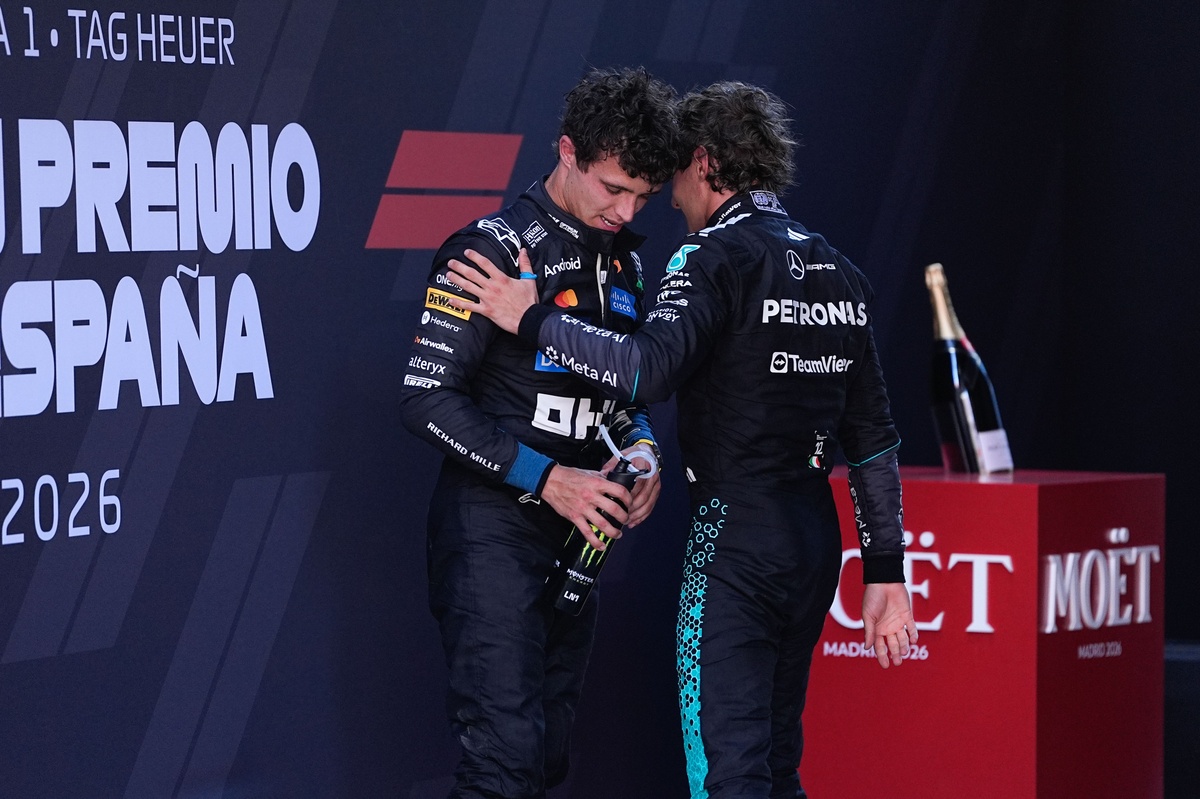
Lando Norris missed victory at the Spanish Grand Prix by a mere two seconds — the margin between the McLaren driver passing the Madring pit entry and the deployment of the virtual safety car that ultimately handed the win to Kimi Antonelli. Norris had built a 6.2-second lead over the Mercedes rookie by the start of lap 14 and appeared firmly in control after shaking off a frantic opening lap that saw championship leader Max Verstappen run off at both Turn 1 and Turn 5 while pressuring the Briton.
Stroll’s Brake Failure Triggers Chain of Events
The race dynamics shifted dramatically when Lance Stroll stopped at Turn 20 at the end of lap 13. The Aston Martin driver reported fading brakes — a problem that had earlier affected Lewis Hamilton, who managed to nurse his Ferrari back to the pits. Unlike Hamilton, Stroll had no strategic reason to continue and parked his car at the marshals’ post near the barrier opening, making it accessible for retrieval.
Yellow flags waved just as Norris exited Turn 14. At that point, there was little indication a VSC would be called; the expectation appeared to be that marshals could quickly remove the stranded Aston Martin.
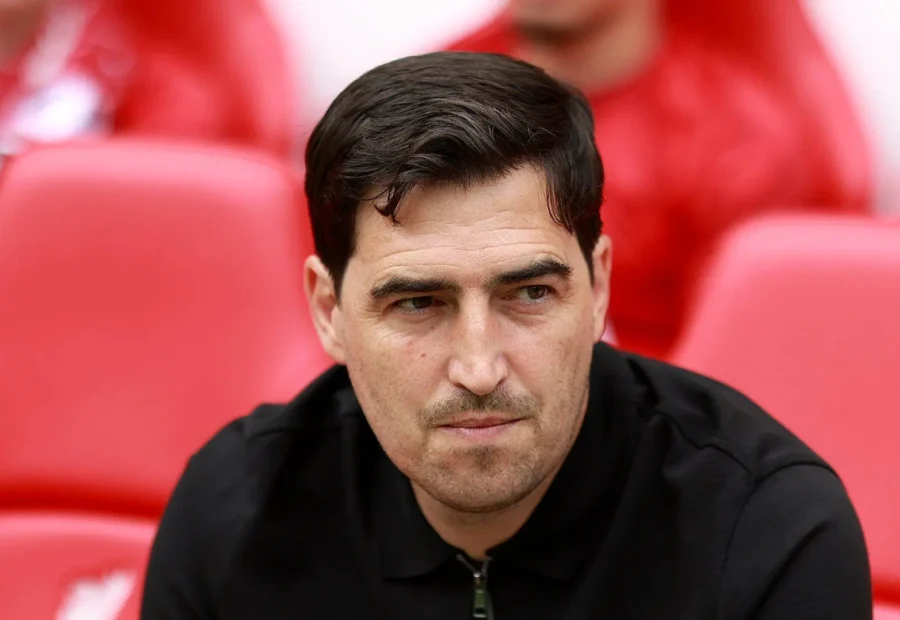
McLaren team principal Andrea Stella later reflected on the decision not to pit pre-emptively:
“In hindsight, it would have been a good idea [to pit pre-emptively], but we will have to review with my engineers to see whether it was kind of obvious that it would end up in a virtual safety car,” said McLaren team principal Andrea Stella.
“Here, the problem is that you need to be extremely careful because it is 27 seconds if you don’t pit under a virtual safety car. So if you get it wrong it will be extremely penalising: from the lead, you pit unnecessarily and now you have lost the victory.
“So, I think a good rule is to respond to what is a fact, to what is the real condition of the circuit. But we will definitely take a look as to whether in these conditions it was just simply obvious that it would end up in a virtual safety car.”
VSC Deployed Two Seconds Too Late for Norris
When Norris passed Stroll’s car, yellow flags were still displayed. McLaren opted against a pre-emptive stop, and the race leader negotiated Turns 21 and 22 — the final corners of the Madring layout. The virtual safety car was deployed the moment Norris exited the last corner, a timing McLaren calculated as just two seconds too late to bring their driver in.
Antonelli, now 6.3 seconds behind, received the call to pit — as did Verstappen and George Russell. Both Antonelli and Verstappen switched to hard tyres, securing a one-stop strategy to the finish. Norris, meanwhile, faced at least one more lap before he could stop, with the risk that the VSC would end before he could capitalize on the reduced pit-lane time loss — approximately 30 seconds under normal conditions at Madring.
Norris Stops After VSC Ends, Loses Track Position
Antonelli and Verstappen emerged from their VSC stops behind Charles Leclerc, who had stayed out on his original hard tyres. Had Norris pitted under VSC conditions, he likely would have rejoined ahead of the Ferrari. Instead, Norris was instructed to stop regardless of the VSC status. The VSC ended as he rounded Turn 21, and he entered the pit lane for his sole stop, taking on hard tyres.
A slow front-right wheel change added several seconds to his stationary time. Stella assessed the impact:
“In fairness and for completeness, we had a seven second pit stop, so there’s definitely takeaways even when it comes to our operations.
“It would have not made a difference for the final result, because probably Lando would have pitted anyhow behind Russell and even if not, it would have not been possible to overtake Verstappen and Antonelli. So definitely, we take note that there’s a lot of work to do in our operation, and it’s not the first time that we have a slow stop. But in terms of the race itself, it didn’t make a difference.”
After Russell’s subsequent stop on lap 28, Norris closed on Verstappen but remained trapped in the Red Bull’s wake until the chequered flag, with victory slipping further away each lap.
Radio Traffic Reveals Real-Time Decision Making
The team radio exchange between race engineer Will Joseph and Norris captures the uncertainty:
Will Joseph: Yellow flags at turn 20. Yellows. Virtual safety car deployed, virtual safety car deployed. No drives in the delta.
Lando Norris: We box?WJ: If it stays long enough.
LN: How big’s the crash?
WJ: I think someone’s brakes… There are marshals on track at turn 20, I haven’t seen it. Just try and stay on the delta.
And Lando [radio breaks]?
LN: I think so, do you?
WJ: Yes, we are.
WJ: Lando, confirming we are boxing this lap, irrespective.
LN: Confirmed.
WJ: We still think there’s marshals on track.
WJ: Virtual safety car ending, virtual safety car ending.
LN: Confirmed box still?
WJ: Yes, confirmed box. So box this lap.
Could McLaren Have Gone Long?
The lingering question is whether McLaren should have kept Norris out longer to build a sufficient gap. With Leclerc holding up Verstappen and Antonelli, a case exists that Norris could have extended his stint, built the roughly 30-second advantage needed to clear Antonelli, and either emerged ahead of Leclerc or waited behind him for the Ferrari’s stop.
The data, however, undermines that scenario. Norris was on used mediums, and his gap to Leclerc pre-VSC stood at just 13.8 seconds. His per-lap advantage over the Ferrari was rapidly diminishing: 0.506 seconds quicker on lap 10, 0.272 on lap 11, 0.264 on lap 12, and only 0.027 on lap 13. With Leclerc experiencing no hard-tyre degradation and gaining pace from fuel burn, building the required 16-second buffer after the VSC lifted was effectively impossible.
Norris quipped that McLaren had been “too fast” over the weekend — suggesting that in their usual competitive position, the VSC timing would have favored them. Stella concluded:
“We considered staying out, but you have to you have to accept the fact that now you are on relatively used medium tyres and the people behind you will be a new hard – so you’re never going to open a gap on people with a new hard,” Stella concluded. “Therefore we kind of needed to accept that that was what we should have done, and the fact that it was incredibly unfortunate.
“Sometimes we talk about being unlucky. I think at times the being unlucky is used for too many applications but, in this case, it’s almost a mathematical definition of being unlucky.”