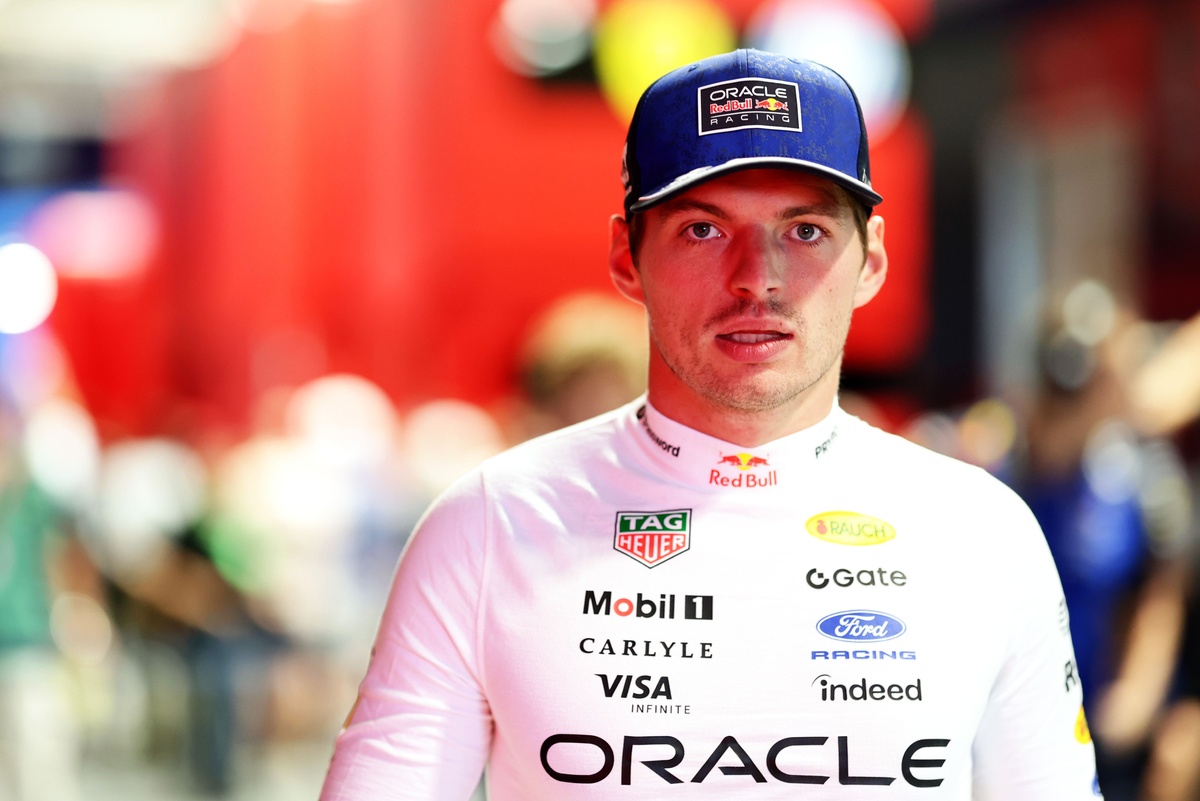
Formula 1 drivers have voiced significant concerns about the new Madring circuit layout following qualifying for the Spanish Grand Prix in Madrid. While support series races at the IFEMA complex have seen multiple incidents, the premier class has avoided major chaos so far. However, the consensus suggests Sunday’s race could present substantial overtaking challenges.
Verstappen Criticizes Track Design and Overtaking Prospects
Reigning champion Max Verstappen was blunt in his assessment during the post-qualifying press conference.
“I still need to figure out a corner where to pass,” Max Verstappen said straight away at the start of the press conference.
Verstappen acknowledged the quality of the new asphalt but highlighted fundamental design flaws.
“They did a good job with the tarmac, even though in some places it’s already a bit too bumpy for a new track. But the corners, like I said before, you can’t overtake.
“For the braking zones, they need to learn that it should never be that you have to steer and combine that under braking. It doesn’t allow any kind of overtaking. So, in terms of track design, I think it can be better. I also think that input from the drivers on track designs can help a lot in the future.”
Braking Zones Identified as Primary Defect
Speaking to Dutch media in the paddock while watching the Formula 3 sprint race start, Verstappen reinforced his view that the circuit layout discourages racing.
“Well, now we can stop watching, now everyone is just following each other,”
he remarked, referencing the lack of passing opportunities. The Red Bull driver explained that the braking zone geometry eliminates the possibility of out-braking an opponent.
“Then there is only one line and that makes it very easy to defend as well,”
Verstappen clarified when asked by Motorsport.com about the braking zones.
Asked what changes would improve the racing, the four-time world champion offered a candid response.
“Almost all the braking zones! If you give me the track map, I’ll sort it out.”
On a more constructive note, Verstappen expressed willingness to collaborate with the FIA and circuit designers.
“They can always ask me, ‘What do you think of this layout?’ I don’t want to go into details now, because you have different track designers, but sometimes I do talk to someone about certain opinions and circuits. Ultimately, a driver knows very well what is needed or what a good corner should look like.”
“There are also some good examples, like Austin. You can race well there. Certain corners are nice and wide. At least you can make a move there, and even if it doesn’t work straight away, you can still fight on the corner exit. There are enough examples of how to do it properly.”
Drivers Excluded from Pre-Construction Consultation
Verstappen revealed that driver input was not sought before the Madring was built, a recurring issue with new venues.
“In Jeddah, we were able to change a few things, but you should really do that beforehand, before the track is built.”
Excessive Pitlane Length Compounds Strategic Limitations
Beyond the racing line, the pitlane configuration has drawn unified criticism. The lane is effectively bisected by an IFEMA exhibition hall, creating an unusually long transit time. Lando Norris raised the issue during the press conference, and Verstappen concurred.
“Yeah, we’ve already talked about that with the FIA and they understood our point as well. It’s not convenient, it hasn’t been thought through logically,”
Verstappen said.
This design quirk carries strategic weight. High tyre degradation observed during practice and qualifying would typically encourage multiple stops, but the punishing pitlane delta combined with the premium on track position will likely push teams toward one-stop strategies on race day.
2026 Power Unit Characteristics Frustrate Qualifying Approach
Verstappen also pointed to the upcoming 2026 regulations as a factor diminishing the qualifying spectacle. Energy management requirements forced compromises on several corners, including the banked turn and the Turn 18-19 sequence.
“Considering the circumstances and what these cars are like, this qualifying was reasonably OK. It’s just that I want to take that banked corner flat-out, but if I do that, then I lose more time on the straight afterwards.
“That means you have to come off the throttle, wait a little bit to charge the battery and then you have more top speed later. All those kinds of things. The same in Turns 18 and 19. You have to lift there as well, because if you stay flat-out, then you don’t have any battery left afterwards.”
Cautious Optimism for Future Iterations
Despite the litany of issues, Verstappen sees potential for the venue if modifications are made.
“If they can maybe change the circuit in a few places, then definitely. Look, I’m never really a fan of street circuits, but there are worse ones on the calendar.”