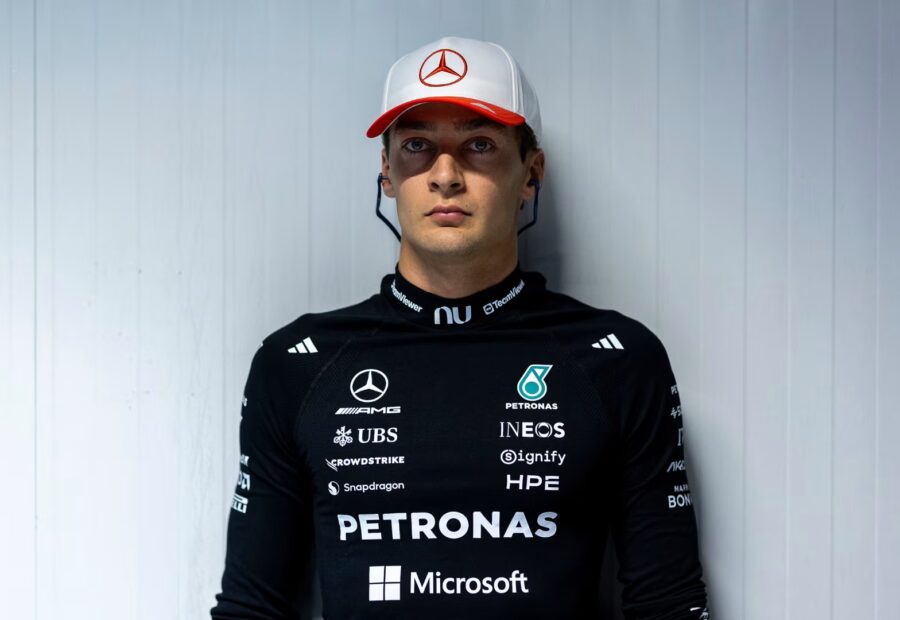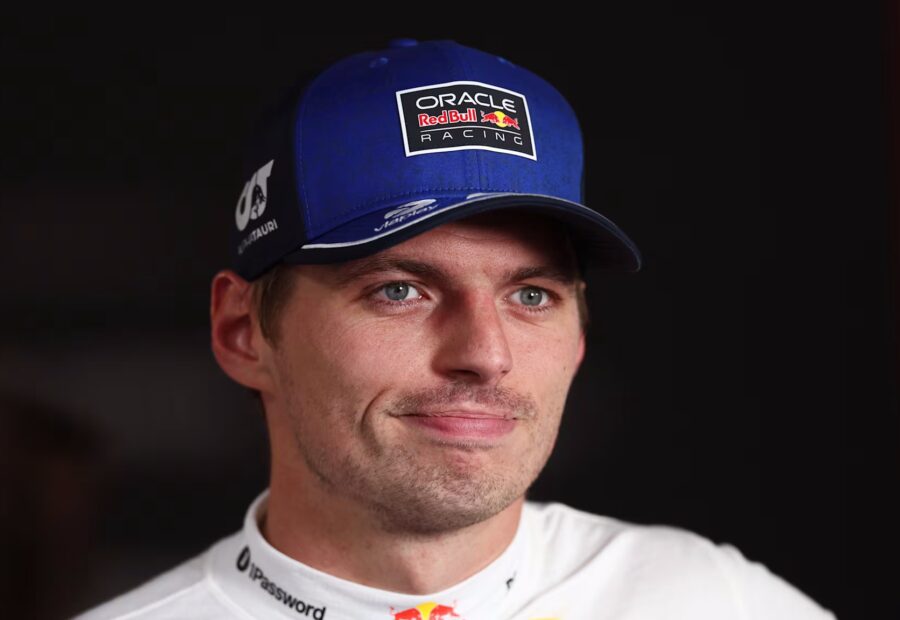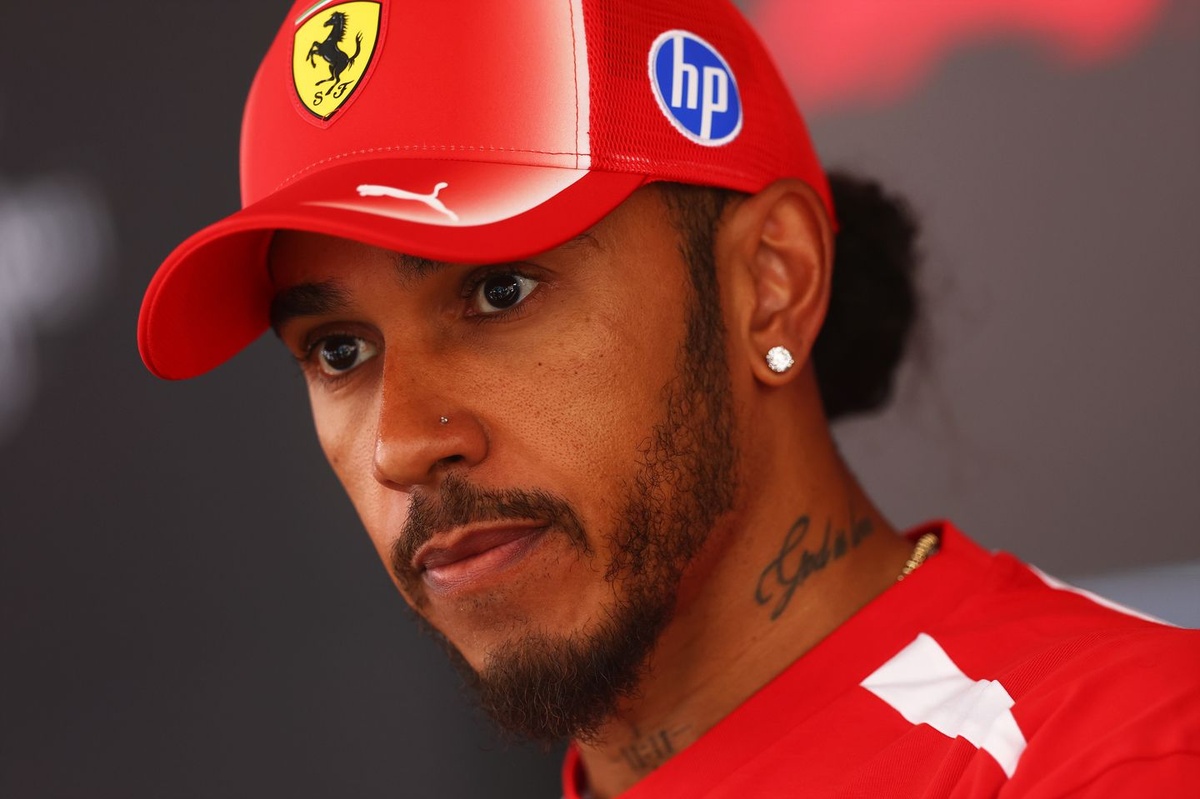
Lewis Hamilton has dismissed suggestions that Ferrari should prioritize his championship bid over team-mate Charles Leclerc, insisting his focus remains on collective execution rather than preferential treatment. The seven-time world champion finds himself 76 points behind championship leader Andrea Kimi Antonelli with 10 rounds remaining, while Leclerc’s retirement at the Italian Grand Prix leaves him 112 points adrift—assuming the final races proceed unaffected by the Iran conflict.
Hamilton Rejects Number One Driver Status
Despite holding a mathematically viable path to the title, Hamilton pushed back against the narrative that Ferrari should funnel resources toward his campaign. When asked if the Scuderia should put all efforts behind him and have Leclerc play a supporting role, Hamilton responded directly:
“That’s not actually really what I’ve been asking for.
“It’s really just making sure we’re executing to make sure we get the best result for the team. Instead of us working against each other and finishing fourth and fifth, maybe we can work together and get a podium, pull off more points.”
Consistency Keeps Hamilton in Contention
Hamilton’s championship relevance stems largely from remarkable consistency: he is the only driver to finish every grand prix inside the top ten this season, with his lowest result being sixth. Yet he remains acutely aware of Ferrari’s fundamental deficit relative to Mercedes, particularly in power unit performance. Ferrari has yet to secure a single pole position in 2026.
Quantifying the Straight-Line Deficit
Hamilton provided specific data on the performance gap, highlighting the straight-line disadvantage that has defined Ferrari’s season:
“Mercedes, if you look at the last race, they were six tenths a lap quicker on the straights,” Hamilton pointed out. “Pretty much most of the other tracks, it was three or four tenths. We were losing just on the straights.
“I think we’ve done a really great job, given that we’ve had that deficit, and we continue to make improvements to the car. We’ve made improvements to the engine. We knew that the last [engine] upgrade wasn’t going to be a silver bullet and close that gap completely. But for me, it’s really positive to see us continuously stepping forward. They are just very, very quick, and it’s not easy.”
Focus on Internal Execution Over External Rivals
Rather than fixating on Mercedes’ advantage, Hamilton emphasized a strategy centered on operational excellence and capitalizing on opponent errors:
“As I said, rather than focus on them – they’re not a focus for me at the moment – I think our focus should just be, how we can do the best and execute the best on our weekends, because there’ll be weekends where they’re exceptional, and there’ll be weekends where they maybe drop the ball.
“As long as we just focus on our consistency and trying to optimise our weekends, maybe there’s going to be a moment where we are able to capitalise on, perhaps, their shortcomings.”
That approach already yielded a signature victory earlier this season, when Hamilton beat Antonelli and George Russell to win the Barcelona Grand Prix—proof that maximizing Ferrari’s package can overcome the straight-line deficit on the right weekend.