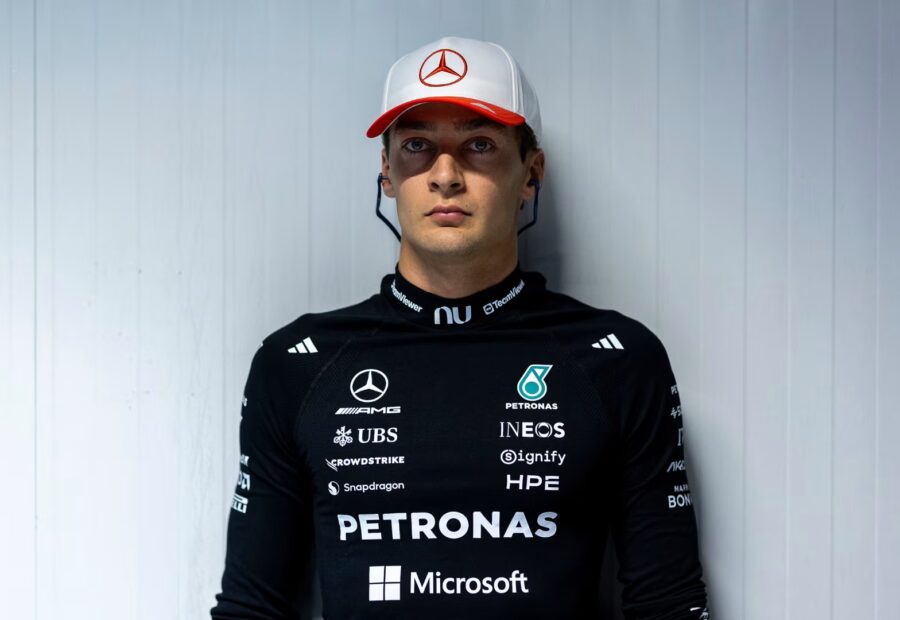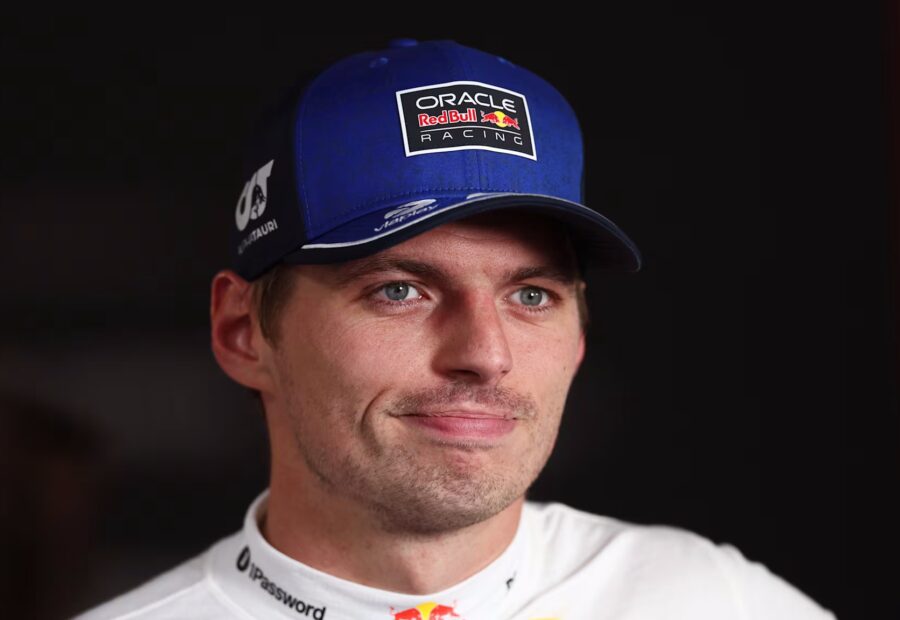
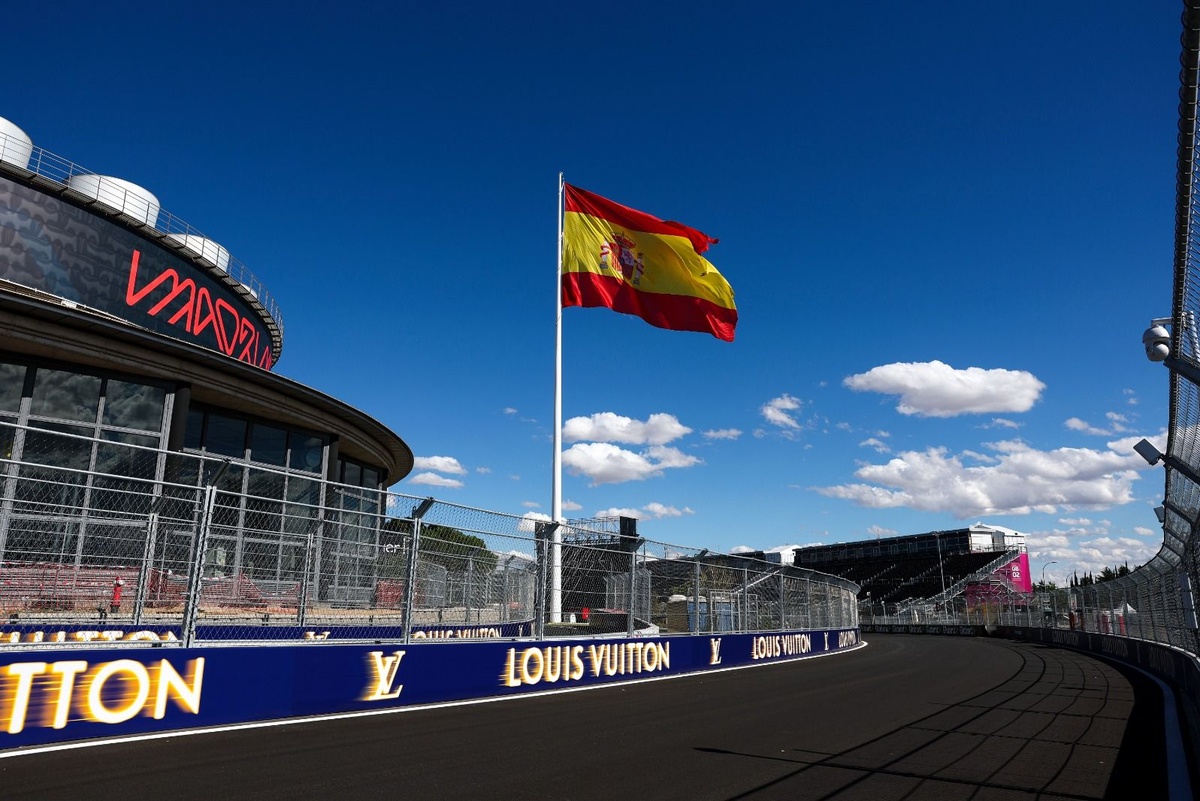
Formula 1 drivers are bracing for a chaotic debut at the new Madring street circuit in Madrid, with widespread predictions of frequent red flags and a punishing test of precision. The consensus from the paddock is that the 5.47-kilometer layout, characterized by blind entries, aggressive kerbs, and a unique banked corner, offers virtually no margin for error.
Red Flags Expected as Drivers Brace for ‘Very Busy’ Weekend
The only real-world running prior to the Spanish Grand Prix weekend came during a Formula 3 test late last month, which served as a stark warning. The session produced 19 red flags and three heavily damaged cars, with incidents scattered across the lap—particularly in the technical second sector featuring chicanes, blind corners, and the banked La Monumental turn.
“I’ll put my money on a red flag, that’s for sure,” said Pierre Gasly when asked what he thought of Formula 1’s new Madring street circuit.
Lance Stroll offered a similarly blunt assessment: “I think we’re going to be busy, very busy.”
Drivers Relish the Challenge Despite Danger
Despite the obvious risks, the prevailing mood is anticipation rather than apprehension. Drivers appear eager to test themselves against a layout that Franco Colapinto describes as a composite of the entire calendar.
“I think this track is going to be extremely difficult for the drivers,” said Franco Colapinto. “In the simulator, putting together one complete lap could take me hours. So imagine what it is going to be like here when you only have two or three laps to do it. Finding that perfect lap is going to be very difficult. It has a bit of everything. If you took everything you find across the 24 races on the calendar and mixed it together, you would probably get something like this. So I’m happy and looking forward to trying it.”
Sergio Perez echoed the sentiment, drawing a parallel to Jeddah’s original high-speed layout. “It’s a bit scary. It reminds me a bit of Jeddah. Good, proper track, [I’m] really happy to be here, and I think the atmosphere here is going to be one of the best.”
Asked how punishing the track could be in response to driver error, Perez was unequivocal. “I think very. It all depends what sort of grip level we get, but I think there is no room for error. It’s very rare, depending on which corner you do a mistake, you might get away with it – but in most places, there is no margin for it.”
Simulator Preparation Meets Real-World Uncertainty
While drivers have logged extensive simulator miles, the transition to the physical circuit introduces variables that virtual tools cannot perfectly replicate. Gasly noted the enjoyment of the simulated challenge but highlighted the unknowns of track evolution.
“Driving-wise, I must say in the sim it was very enjoyable and very exciting,” said Gasly. “I got a good read and feel of pretty much every single wall at every single corner, so actually I know what to do and what not to do. But I think it’s going to be very challenging, especially in terms of evolution, probably a lot of track evolution, kind of slightly off-road braking zones, which are not fully straight, kind of like snaky, very twisty type of corners, many corners, a lot of blinds, banking, up and down, undulation all the way.”
Aggressive Kerbs a Major Unknown
A critical concern is the size and profile of the kerbs, which simulations may not render with total accuracy. The second chicane, feeding onto an uphill gradient with a wall at the exit, demands a committed approach over “proper kerbs” that can launch a car into the barriers if misjudged. The scenario draws comparisons to the Norisring, though the Madrid entry kerbs add an extra layer of complexity.
“They’re not small kerbs, they’re proper kerbs, so we’ll need to attack them.” Arvid Lindblad
Lindblad, who tested in F3, emphasized the difficulty of simulating kerb interaction precisely. “I think Monaco is more unforgiving. But yeah, it’s not a very forgiving track. I think all street circuits now, there’s not much margin. This one definitely does not have much scope for error. That’s probably the thing that’s the hardest to simulate. From offline simulations, but also just from the sims that we drive, they get, I think, a measurement from the FIA with a photo saying, ‘it looks like this, and this is this many centimetres’, you know, width and length, whatever. But yeah, that’s the hardest part to simulate. So I think that I would already say just from a driving point of view will be a challenge because they’re not small kerbs, they’re proper kerbs, so we’ll need to attack them.”
Grip Levels and Track Evolution Add Variables
Following the F3 test, the circuit was jet-washed to remove the greasy bitumen layer common on fresh asphalt. However, grip levels remain uncertain and will evolve significantly throughout the weekend. This evolution, combined with rubber marbles accumulating off the racing line, could create a “park the bus” dynamic where defending drivers hold the advantage on the only viable line.
“The tyres are going to be absolutely screaming.”Alex Albon
Blind Corners Demand Muscle Memory Over Vision
The majority of corners are late-apex and blind, forcing drivers to commit before seeing the clipping point. This requires intense repetition to build the muscle memory and internal timing necessary to hit invisible apexes consistently.
“You’re kind of swinging in from a blind spot and you’ve got to try and pick an imaginary spot that’s a few hundred meters in front of you,” explained Alex Albon. “That’s really challenging to do. It’s a lot of repetition and muscle memory just to get that timing right. Because you basically can’t see an apex. So now you’re just using your internal body clock and almost imaginary, you’re trying to focus on a reference point or something to know what’s your apex point of that corner.”
As in Jeddah, these blind sections are likely to create qualifying flashpoints when cars on flying laps catch slower traffic unexpectedly.
Technical Setup Compromise: Kerb Riding vs. High-Speed Stability
The circuit layout forces a difficult chassis compromise. The first sector demands a compliant suspension to attack kerbs, while the high-speed second and third sectors reward stiffness for aerodynamic load. This disparity will widen the performance gap between teams with efficient downforce and those without, particularly regarding energy deployment from the power unit.
“Technically speaking, there’s a lot of corners on this track that will be between 90% and 100% throttle,” explained Albon. “I think for the top teams, it will be flat out. For the midfield teams and the backfield teams, a bigger lift, which has a big effect in deployment. If you can do a corner flat or not, it massively changes the way the deployment works. And you don’t want to go in qualifying, suddenly all these corners start to become flat and your deployment starts to move around a lot. That’s what we’ve found so far.
“The technical part will be, can you make a car that is good over the kerbs from Turn 1 to Turn 5? But you want the stiffness in the car for Sector 2 and Sector 3, because actually, the stiffer car gives you more load. But then you’re going to sacrifice your Turn 1, Turn 2 kerb riding. And then the final thing is, is it one of those weekends where Q3, Run 2 for those guys – Q1, Run 3 for us – do you end up just sending it across the kerbs? I mean, that Turn 5, 6 feels a little bit like, I hope there’s a rhythm to it and it’s actually not that bad. But I think there’s an angle there that you’re going to just send it. If you get through the other side, you’re going to be two or three tenths quicker. And if you don’t want to take that risk, you lose out on those few tenths. The other thing we’ve seen in the simulator already is the tyres are going to be absolutely screaming.”
Unique Banked ‘La Monumental’ Corner Presents New Test
Unlike the banked final corner at Zandvoort—which is effectively a straight limited by engine power—La Monumental is grip-limited. Drivers will carry full throttle for over four seconds through a corner that flows onto a section with a change of camber, inviting experimentation with racing lines and raising the spectre of multi-car incidents as limits are explored.
With bridges, tunnels, undulations, and a relentless sequence of technical corners, the Madring promises to be one of the most demanding street circuits Formula 1 has visited in years. The drivers are ready; the track, however, may have the final say.