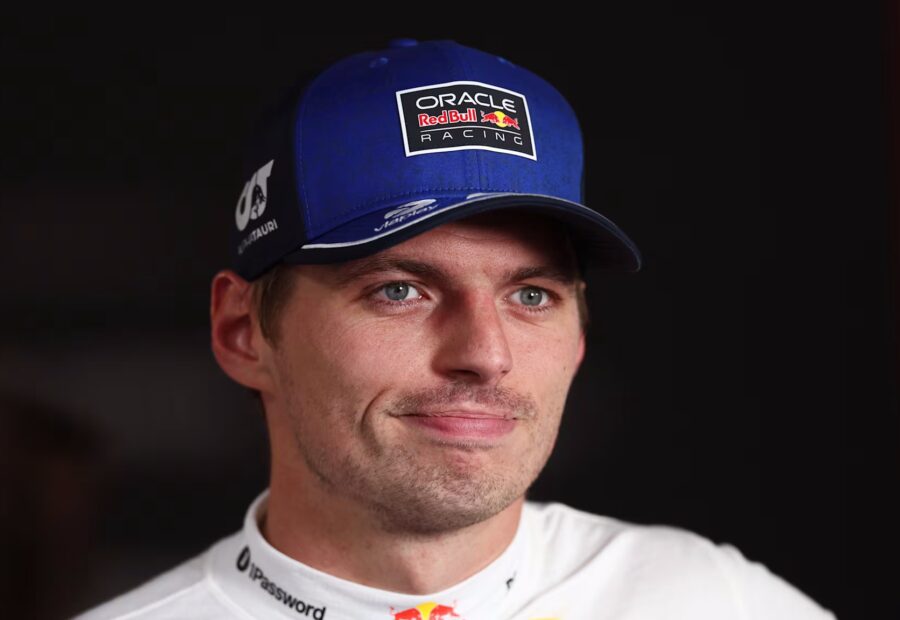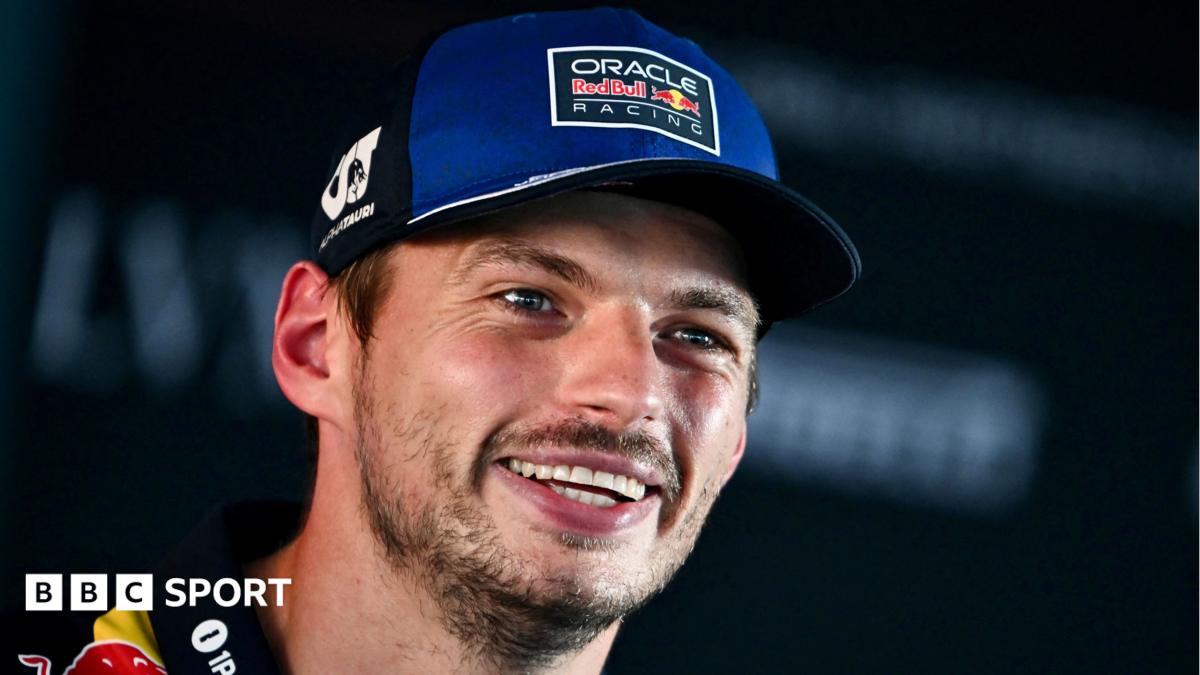
Max Verstappen sat down for an exclusive interview with BBC Sport on the eve of the Italian Grand Prix at Monza, offering his most uncompromising assessment yet of Red Bull’s 2026 campaign and his decision to extend his contract with the team.
Contract extension offers stability but no guarantees
The four-time world champion signed a two-year extension earlier this year that theoretically runs through 2030, though performance clauses remain in place. The deal keeps Verstappen at Red Bull but leaves the door open for a departure if the team cannot return to championship contention next season.
Verstappen arrived for the interview in sweltering conditions, with temperatures in the mid-30s Celsius and the team’s hospitality unit struggling to cope. “It’s too hot in here,” he said, briefly adjusting a fan before dismissing the need for a break. “No, no. I’m good. It was just that it was super-hot in the corner when I was doing the print [media].”
Season assessment: learning for 2026
When asked where his head is at regarding the season so far, Verstappen was blunt. “Of course it’s not where I want to be, but as a team we’re trying to just learn and understand a lot of things for next year. We are not in a title fight. We are just trying to find more performance.”
He emphasized that fundamental changes are needed for next year’s car. “Changes need to happen to the car for next year. We will not be able to change that for this year, but we just need to try and get a lot of learnings to do better next year.”
On the specific deficiencies, Verstappen pointed to inconsistent balance through corners. “Overall we’re just lacking a bit of performance. The car is not where I want it to be feeling-wise, and the through-corner balance is too hit and miss between entry, mid and exit.” He added, “It’s just fundamentally something in the car that we need to try and work on for the next year.”
Recurring issues across regulation changes
The Dutchman acknowledged this has been a theme extending beyond the current season. “That’s exactly that. There’s also things that we talk about within the team, like how can that happen, how can we fix it? That’s basically what we are doing now and trying to do now.”
Personnel changes are part of the response. “Some people have left, new people have come in. With the new people, we are discussing what we can do about it. Is that just some changes, a different philosophy? All these kind of things.”
Why he stayed: family, belief, and broader projects
On his decision to extend, Verstappen cited emotional and practical factors. “It comes down to also feeling well within a team. This is like a second family to me.”
He expressed confidence in the team’s ability to rebuild. “The belief that you can turn things around, you can build towards hopefully a better future with other people, new people. And at the end of the day, it’s not only Formula 1 for me. There are a lot of things that I’m doing next year that Red Bull is involved in as well.”
“I feel good here. So this, for me, is the right place to be.”
No hard sell required
Verstappen said the decision did not require extensive persuasion. “I always said to them: ‘Don’t stress about it, just work on the car.’ Because the faster the car goes, the easier the decision is anyway.”
He acknowledged the team’s anxiety but remained focused on his own role. “I can understand, of course, maybe sometimes they were a little bit worried. But at the same time, for me, I was just worried about here, what was going on.” Outside commitments also limited his engagement with other options. “At the same time, I was very busy with my stuff also outside of Formula 1. So I never really spent a lot of time talking or doing different things or trying to go somewhere else.”
Loyalty over convenience
Addressing the perception that Red Bull had little leverage, Verstappen framed his stance as a matter of principle. “I don’t mind the challenge also. I don’t have that desire or need to show in another car that I can win it, or whatever.”
He rejected the idea of chasing the fastest machinery. “It’s easy to run to the fastest car and then do it all again. But it’s not how I am. You cannot be the captain of the ship and as soon as there is something not working, you jump off the ship.”
Verstappen even welcomed the rebuilding process. “It’s been a bit downwards from the dominant years, but I don’t mind also rebuilding it. It’s another challenge as well.”
Talks with Mercedes and McLaren
Verstappen confirmed discussions with rival teams but downplayed their significance. “Of course, any kind of chat you take seriously. They’re all very respectful chats. There’s nothing wrong with that.”
His decision ultimately came down to instinct. “I felt that staying was, for me, the right choice. You have to follow your heart. I could have run away very early on in my Red Bull career and gone somewhere else to try and win. If you have a little bit of patience, you do end up winning. I feel like that’s my approach now as well.”
Highlight of the year: Nürburgring 24 Hours
Asked about his most enjoyable race this season, Verstappen pointed to his endurance debut. “Probably the Nordschleife [Nurburgring 24 Hours]. It was super-cool to be able to do an endurance event with my team-mates, the guys that won with the car throughout the main season.”
Despite a mechanical retirement, the experience stood out. “We knew that we were going to be really strong. We peaked at the right time, but unfortunately the car retired. It was an incredible experience. And pure. Pure motorsport.”
Simulator preparation paid off
Verstappen’s opening stint, where he climbed from tenth to first in treacherous conditions, drew particular praise. He credited extensive simulator work. “I was enjoying it. Not easy conditions. It started to drizzle. The track was slippery. Crashes. Code 60s [when a stretch of track is limited to 60km/h after an incident].”
He dismissed suggestions he might be out of his depth. “Some people were like: ‘Let’s see how he will do in the race under pressure with all these kinds of scenarios that he has never done before.'” Instead, “But I have done them a million times on the simulator. I have done so many laps and 24-hour races on the simulator. I never felt out of depth or whatever. I was fully zoned in. I just had a great time.”
The intensity of the race brought a familiar focus. “Once I was in the race, you switch to another level. I was just in a zone. It’s really enjoyable.”
Endurance ambitions on his own terms
Verstappen confirmed a desire to return to the Nürburgring and pursue other endurance events, including the Hypercar class in the World Endurance Championship. “All the endurance races. Eventually, of course also Hypercar [the world endurance championship]. I don’t want to rush it. I want to do it in the right environment. On my terms. And competitive.”