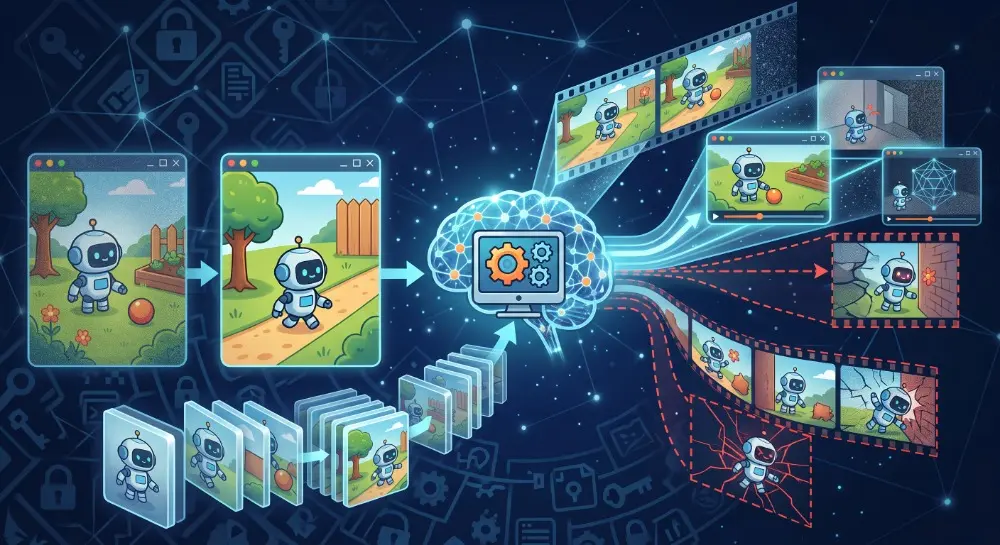
Redefining AI Slop: A Potential Gateway to Physical World Intelligence
The prevailing view often dismisses low-quality, mass-generated synthetic content—commonly labeled as AI slop—as a mere nuisance cluttering the internet. However, a shifting perspective suggests this deluge of imperfect data may hold unexpected value for the next frontier of artificial intelligence: embodied AI and physical world interaction.
The Misunderstood Value of Synthetic Noise
Traditionally, “AI slop” refers to the high-volume, low-fidelity output generated by models prioritizing quantity over quality. It fills social feeds, search results, and content farms. While critics highlight the degradation of information ecosystems, researchers are increasingly investigating whether this chaotic data reservoir serves a functional purpose in training robust world models.
From Digital Artifacts to Physical Reasoning
Developing AI capable of navigating, manipulating, and understanding the physical world requires massive, diverse datasets representing real-world complexity. Curated, high-quality datasets are expensive and narrow. Conversely, the vast, messy spectrum of generated content—including errors, hallucinations, and bizarre compositions—may expose models to a wider range of edge cases, physical inconsistencies, and novel object interactions than pristine data alone.
This exposure could be critical for training world models that predict the consequences of actions in physical environments. By learning to distinguish plausible physics from impossible geometries within “slop,” models may develop a more resilient understanding of spatial reasoning, causality, and object permanence.
Implications for Embodied AI Development
If validated, this approach reframes the current generative AI flood not just as pollution, but as a massive, automated data augmentation strategy. It suggests a pathway where the byproducts of today’s content mills become the training fuel for tomorrow’s robots and autonomous agents, bridging the gap between digital simulation and tangible reality.