McLaren will bring new aerodynamic parts, including its innovative ‘H-Wing’ rear wing, to the Italian Grand Prix as the team looks to maintain its strong recent form.
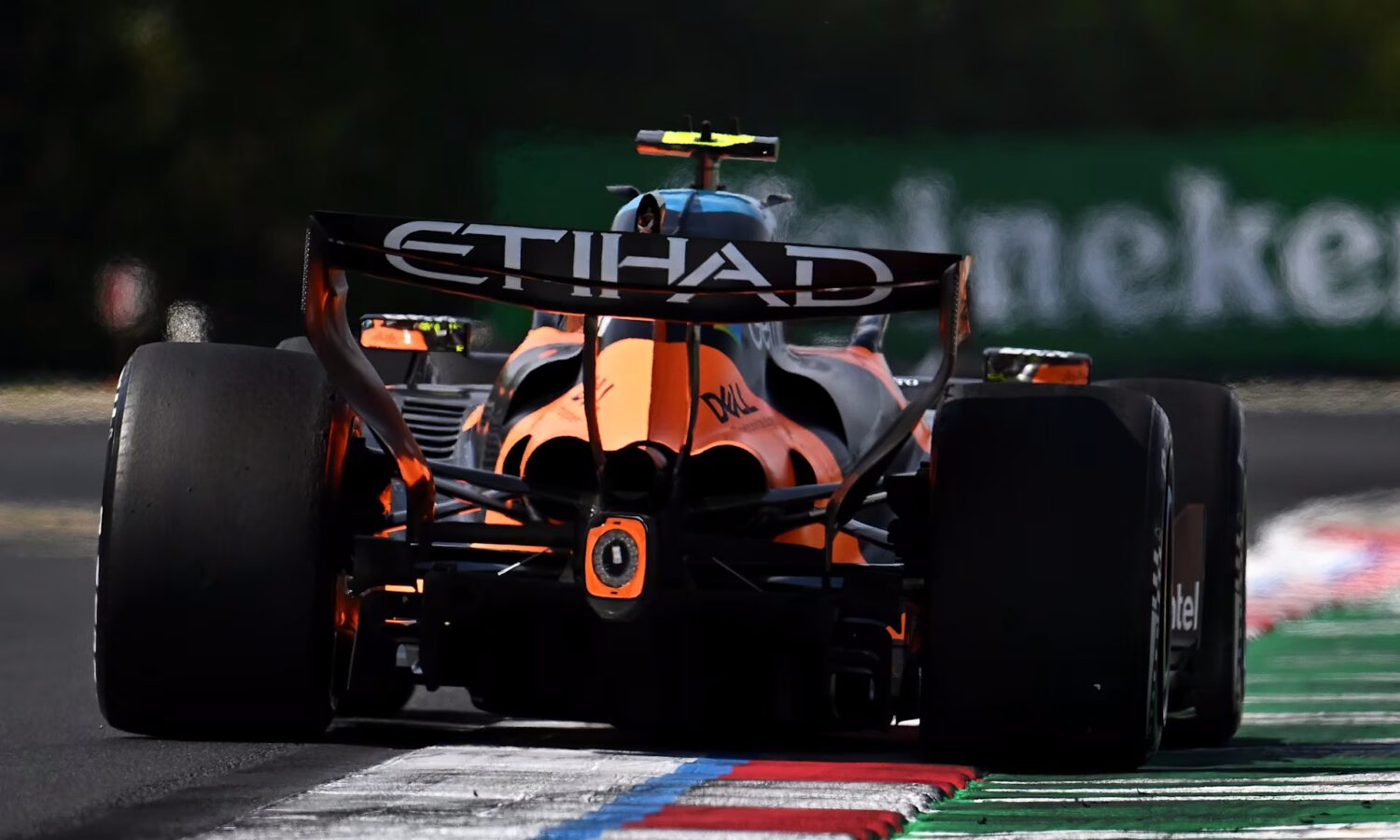
The Woking-based team is planning to run the rotating rear-wing design during the Monza weekend. McLaren previously trialled a similar concept during Free Practice 1 at the Hungarian Grand Prix, following Ferrari’s debut of its so-called ‘flip-flop’ rear wing in pre-season testing and Red Bull’s introduction of its own version in Miami.
In its Italian Grand Prix preview, McLaren explained the origin of the ‘H-Wing’ name:
“The H-Wing’s naming convention pays homage to McLaren’s innovative F-duct, which debuted in 2010 and took its name from the ‘F’ in the branding positioned alongside the system’s inlet on the car,” the preview reads.
“In the same spirit, the H-Wing is named after the ‘H’ in Etihad Airways branding displayed on the rear wing as part of the team’s partnership with the airline.”
McLaren also confirmed that it will introduce “minor aerodynamic updates” at Monza, alongside “previously declared parts that are specific for such a unique track layout”.
Neil Houldey, McLaren’s Technical Director of Applied Engineering, outlined the technical demands of the Italian Grand Prix ahead of the weekend:
“Monza presents a unique challenge, with its long straights placing a premium on drag reduction, while the heavy braking zones demand stability and the chicanes require good ride performance.
“Energy will also be limited around the lap, so understanding the best way to recharge and deploy it will be an important focus during practice. Managing overtakes will therefore be particularly important, as different approaches to harvesting and deploying energy could create a yo-yo effect, with cars trading an advantage at different points around the lap.
“That said, the margins at the front remain extremely tight, so the accuracy of our pre-event simulation and simulator work will be critical in giving us a strong baseline. From there, we need clean practice sessions to refine the car and maximise the car-and-driver combination.
“This weekend, we have brought what we believe is needed to be competitive, including a new low-drag rear wing specification, including the first use of our H-Wing, alongside some small aerodynamic and low-drag options that we will evaluate before deciding the final specification for Qualifying.
“Overall, we know there is still more performance to unlock from the MCL40, both through maximising the package we already have and through further upgrades planned for the races ahead.”
Source: www.formula1.com