
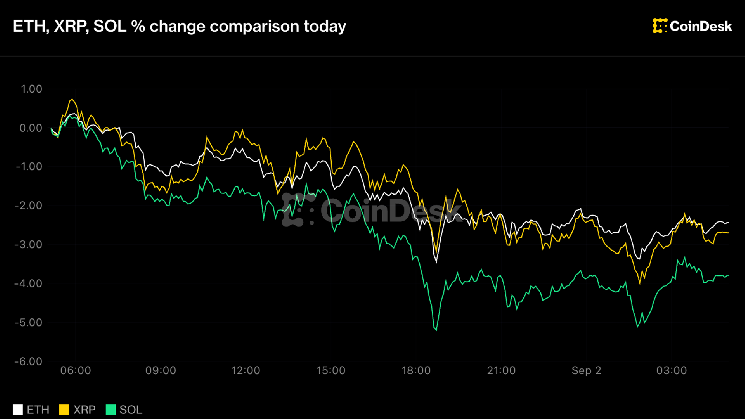
Bitcoin came under pressure as oil prices and government bond yields surged, pointing to a broader macroeconomic shock rather than a crypto-specific trigger.
Oil and bond yields raise pressure on risk assets
Brent crude climbed above $95 after the strikes renewed concerns about shipping through the Strait of Hormuz. The U.S. 10-year Treasury yield also reached 4.81% overnight, its highest level in about three years.
Bond markets in Asia moved sharply as well. Japan’s five-year government bond yield reached a record high, while the 10-year yield touched 3% for the first time in three decades. Japanese stocks fell more than 2%, and South Korea’s Kospi declined by more than 3%.
Higher rate expectations weigh on Bitcoin
Rising interest-rate expectations are adding to the pressure on cryptocurrencies. Traders using the CME FedWatch tool placed the probability of a Federal Reserve rate hike at its September meeting at 66%, up from about 40% a week earlier.
The shift followed comments from Fed Chair Kevin Warsh at Jackson Hole, where he argued that monetary policy may not yet be restrictive enough to bring inflation under control.
Gold also slipped to approximately $4,296 an ounce in its second consecutive session of losses. The decline makes it harder to interpret the market move as a straightforward rotation from risk assets into traditional safe-haven assets.
Before the strikes, Bitfinex analysts said Bitcoin should consolidate or move gradually higher unless there is a pullback across all risk assets that drags BTC lower with it.