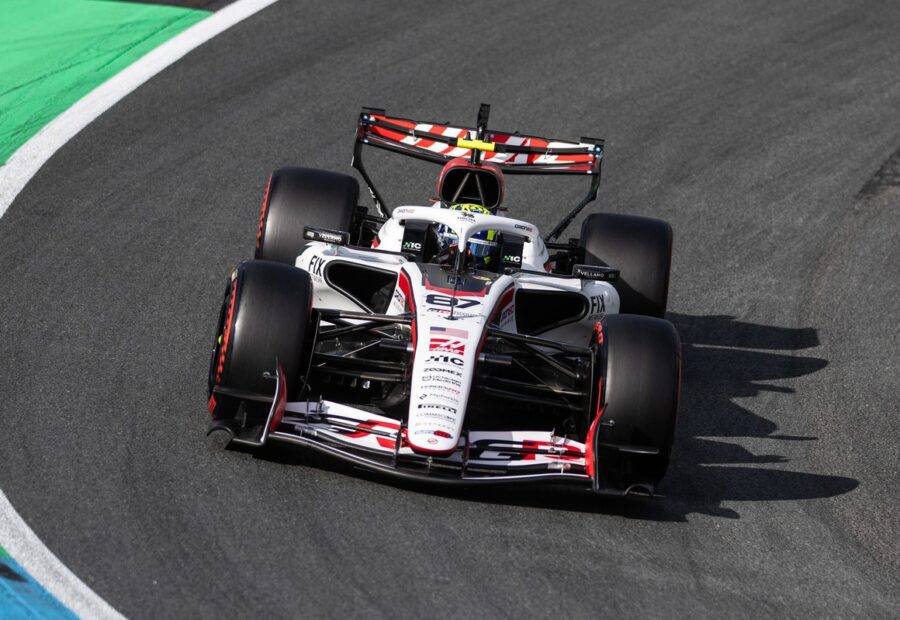
Ferrari team principal Fred Vasseur believes rival Formula 1 teams copying the SF-26’s innovative aerodynamic concepts is a “good reward” for the Maranello-based team.
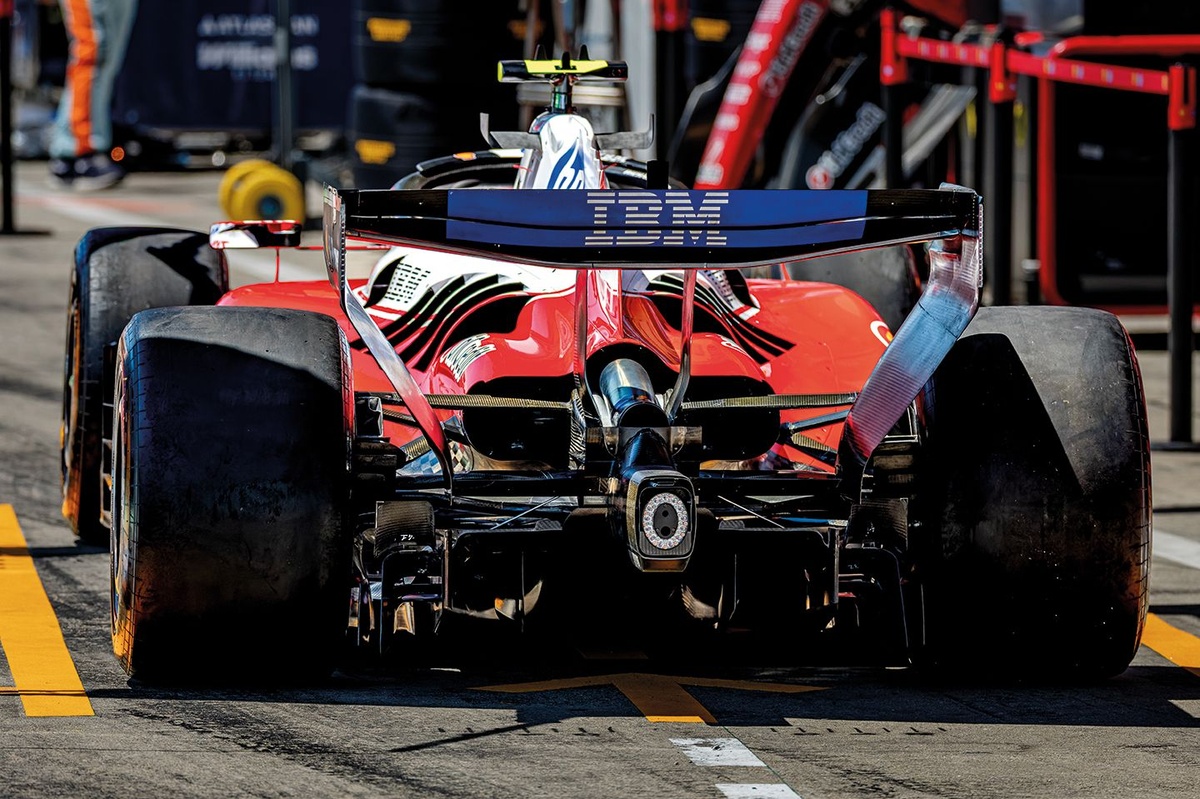
Ferrari entered the 2026 regulations cycle with a striking car featuring several notable areas of technical innovation. At winter testing in Bahrain, the team added a winglet to the structure behind the exhaust. Internally known as Flick Tail Mode (FTM), the device generates additional rear downforce at the cost of a small increase in drag.
Ferrari introduced another concept the following day: a rotating wing nicknamed the Macarena wing, which flips 180 degrees between cornering and straight-line configurations.
Ferrari’s exhaust wing copied by rivals
The exhaust wing has been widely copied by Ferrari’s rivals, although the Scuderia’s design has proved difficult to fully reverse engineer because Ferrari developed parts of the rear of the SF-26 around the concept. The FIA has since banned the exhaust device for 2027 by closing the relevant loophole in the technical regulations, preventing similar designs from becoming increasingly extreme.
Red Bull has also adopted the upside-down wing, while McLaren has tested its own version. McLaren began work on the project after seeing Ferrari’s design during testing, whereas Red Bull independently pursued a different concept.
“We were disappointed not to pick that up as quickly as Ferrari did and then Red Bull,” said McLaren technical director Neil Houldey. “As soon as we saw it, we realised there was an opportunity there.”
Speaking exclusively to Motorsport.com, Vasseur said Ferrari’s aerodynamicists and designers had received a boost from leading the development race. He has encouraged the team to embrace innovation and take greater risks.
Asked whether rivals copying Ferrari’s exhaust wing and rear wing represented a compliment to Maranello, Vasseur replied: “I’m not there to have compliments. I’m there because I want to win. The best compliment for me is to go on the podium.
“But yes, it’s true that for the guys in the team, to see Red Bull coming with the wing, and I think probably Red Bull started before seeing our wings, but the others starting to copy [it], or even the device on the exhaust, for the guys in the team who had the idea it’s a good reward.”
Ferrari’s SF-26 emerges as a leading F1 chassis
Despite Ferrari’s well-documented power unit weakness, the SF-26 can arguably be regarded as the strongest chassis in Formula 1. After a series of upgrades, Charles Leclerc and Lewis Hamilton have both won a grand prix, at Silverstone and Barcelona respectively, while Ferrari sits second in the championship standings.
The SF-26 was the first Ferrari designed under technical director Loic Serra. He was signed in 2023 but joined the team from Mercedes only at the end of 2024 after an extended gardening leave period.
Vasseur said Serra’s delayed arrival and the time required to develop the 2026 car illustrated why it takes so long to transform an F1 team.
“The frustration that you can have sometimes in F1 is that on the technical side the process is mega long, because you have a lot of inertia,” he explained.
“For example, we started to discuss [with Loic] mid ’23 and he joined the team at the end of 2024. Then he’s focused on the car of ’26, and he’s still recruiting people to help him. It means that this process is about years, when on the other hand we want to get results next week.
“I’m very, very pleased with the choices that we made, with the set-up that we have, and the collaboration that we have in the team. The team is strong. The collaboration is mega strong.”