Kalshi traders see a strong chance that the Senate will hold a vote on the CLARITY Act before Oct. 1, but prediction markets assign the legislation a much smaller chance of becoming law in 2026.
As of Aug. 31, Kalshi traders priced the probability of a Senate vote before Oct. 1 at 91%. Polymarket, however, gave the CLARITY Act only a 13% implied chance of becoming law this year.
Image source: Kalshi, Aug. 31, 2026.
Sept. 15 Senate Vote Sets the CLARITY Act Timeline
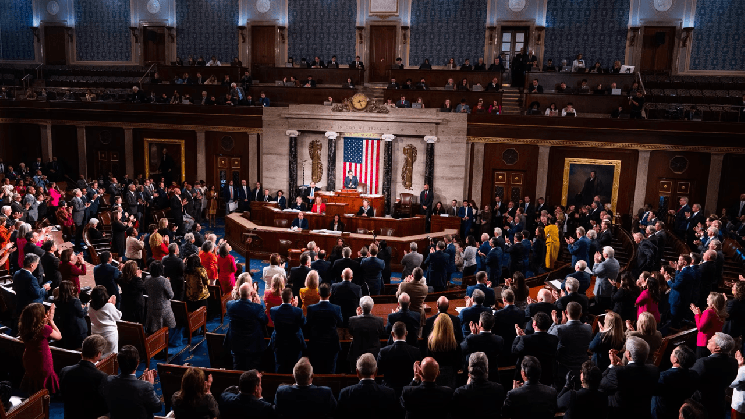
The Senate left Washington on Aug. 8 after Majority Leader John Thune filed a cloture motion, setting up a procedural vote for Sept. 15. Cloture generally requires 60 votes and would allow the Senate to move toward debating and potentially passing the legislation.
Clearing that hurdle would solve only the first problem. According to reporting by American Banker, Capital Alpha Partners’ Ian Katz cut his estimate for enactment from about 40% to 25%, or potentially lower. He warned that overcoming cloture would not guarantee final passage.
Galaxy Digital reduced its estimate even further, placing the probability at 10% in August as Congress used up more of the legislative calendar.
Prediction Markets Expect a Vote but Doubt Final Passage
Trading activity in prediction markets reflects the same divide. Kalshi’s Senate vote contract has generated more than $1.25 million in volume, while its broader crypto market structure enactment contract has attracted more than $6.8 million.
Image source: Kalshi, Aug. 31, 2026.
Polymarket’s market on whether H.R. 3633 will become law in 2026 has drawn roughly $11.5 million. Its implied probability stands at just 13%, down sharply from the 82% odds traders assigned in February.
Image source: Polymarket, Aug. 31, 2026.
Three Disputes Threaten the Crypto Market Structure Bill
The CLARITY Act would establish a federal framework for crypto markets, give the Commodity Futures Trading Commission exclusive authority over spot digital commodity markets, and leave the Securities and Exchange Commission responsible for certain securities offerings and exchange activity.
Three disputes are putting pressure on the coalition needed to secure 60 Senate votes: ethics restrictions involving government officials and crypto, stablecoin rewards that banks view as competition for deposits, and protections for decentralized finance (DeFi) projects and non-custodial software developers.
Several Democrats who once appeared open to negotiations have criticized the latest version of the bill. Banking groups have also continued to oppose stablecoin yield provisions. Republicans including Sens. Cynthia Lummis, Tim Scott, John Boozman, John Thune, and Thom Tillis remain among the legislation’s strongest supporters.
SEC and CFTC Move Ahead as Congress Runs Out of Time
Federal regulators are not waiting for lawmakers to resolve the legislation. SEC crypto rulemaking and CFTC initiatives involving exchanges, leveraged trading, and decentralized finance could establish major parts of the regulatory framework without congressional action.
However, future administrations can generally reverse agency rules more easily than federal statutes. That makes the Sept. 15 vote a critical pressure point for the CLARITY Act.
Even if senators clear the 60-vote procedural threshold, Congress faces a crowded schedule that includes government funding, defense legislation, and the approaching midterm elections. Another failure could push the broader crypto market structure debate into a lame-duck session or into 2027.
For crypto companies, banks, and investors, the key question is no longer whether Washington will continue discussing the CLARITY Act. It is whether senators can assemble enough votes on Sept. 15 to keep the bill moving.