The US Open has long been associated with premium prices, from $30 tennis-themed Champagne cocktails and $100 caviar-coated chicken nuggets to $150 ball crew shirts designed by Ralph Lauren. Now, the tournament is taking its luxury strategy even further.
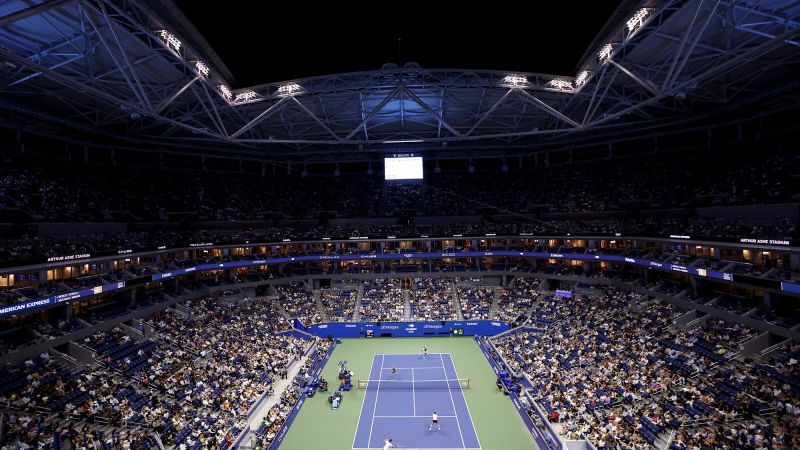
Arthur Ashe Stadium, the 29-year-old centerpiece of the US Open, is debuting the first phase of an $800 million renovation this month. The upgrades include more courtside seats and expanded premium suites, while thousands of upper-level seats are being removed.
US Open adds premium seats while removing upper-level capacity
Courtside seating is increasing by 66% to approximately 5,000 seats, according to organizer United States Tennis Association (USTA). The stadium’s high-end suites, used by marquee sponsors including Grey Goose, Dobel Tequila and Emirates airline, are also being remodeled and expanded.
But the premium expansion comes at the expense of more affordable seating. Nearly 3,000 upper-level seats will be eliminated once the renovation is completed next year, making cheap tickets harder to find as the tournament continues to report record attendance. The changes have already frustrated fans and some players.
The US Open’s shift toward luxury seating reflects a broader trend in professional sports, according to Victor Matheson, a sports economist at the College of the Holy Cross. Since the early 1990s, newly built and renovated stadiums have increasingly replaced “bleacher seats and general entry with premium seating, suites and luxury boxes.”
“The average fan has been displaced for 30 years,” he told CNN. “We’ve got more and more people competing for the same number of premium experiences, and those people have more and more money — especially at the upper end — and they’re willing to spend it.”
US Open ticket prices have risen sharply as a result. Prices on resale websites for the tournament’s opening round, which begins August 30, reached a peak 60% higher than they were a year earlier, according to price-tracking platform TicketData.
Tommy Paul, a highly ranked US tennis player, appeared visibly shocked on a recent podcast after learning that grounds passes cost $500 this year. The same passes cost less than $100 in 2019.
“I wish it wasn’t that high,” he told USA Today this month, adding that the US Open is becoming “more corporate” and failing to attract the “true fans.”
Luxury hospitality drives US Open revenue
Demand for live sports and other in-person experiences continues to grow. The World Economic Forum forecasts that sports tourism will expand into a $1.7 trillion market by 2032, up from $600 billion in 2023.
The trend is evident in the US Open’s finances. Ticket sales and broadcast rights account for more than half of the tournament’s income, but revenue from “corporate hospitality and services” grew faster, nearly doubling from $42 million in 2019 to $83 million in 2024, according to USTA financial reports.
The tournament has added two new levels of suites at Arthur Ashe Stadium, with rental prices starting at $15,000 for a single session. Invite-only sponsors’ boxes are also receiving major upgrades.
Emirates’ large suite above the center of Ashe is being remodeled this year to resemble the spacious lounges and curved bar found on the airline’s double-decker Airbus A380 planes. Grey Goose’s redesigned suite is modeled on a high-end French hotel.
Dobel Tequila’s new suite covers nearly 700 square feet, making it two-and-a-half times larger than its previous space. The expansion helps accommodate A-list celebrities and influencers, said Lander Otegui, executive vice president of marketing and innovation for Dobel’s parent company, Proximo Spirits.
The appetite for live events has fueled the “experience economy” around VIP access, hospitality and travel packages. On Location, which sells premium packages for major events such as the FIFA World Cup, Super Bowl and US Open, generated $666 million in revenue during the first six months of this year, a 60% increase from the same period a year earlier.
Its chief operating officer, Ed Horne, said the company is having its “biggest year” in its nearly three-decade history.
“People largely don’t just want a ticket anymore but want to get closer than ever,” Horne told CNN. “We are in an ‘experience economy,’ and there is no sense that is slowing down.”
Premium sports tickets target wealthier fans
For stadiums and tournament organizers, luxury seating can generate substantially more revenue from a smaller number of fans. In an analysis of Boston Celtics ticket sales, Matheson found that two courtside seats generated as much revenue as an entire upper-deck section at TD Garden.
The “significant margin” from premium seating is difficult for venues and organizers to ignore, Matheson said. “There is a huge amount to be made on those super-premium experiences.”
New stadiums are increasingly reducing overall capacity while expanding premium offerings. The NFL’s Buffalo Bills’ new stadium, for example, has fewer seats and suites than its predecessor, but the new luxury boxes cost more and reach as high as $60,000 per game.
College sports venues are following a similar path. Florida State in Tallahassee reduced its total seating capacity by 12,000 while adding renovated luxury suites and new clubs. The renovated University of Kansas stadium in Lawrence made comparable changes.
Matheson said the shift toward wealthier fans intensified during the Covid-19 pandemic, which “brought out of a ‘fear of missing out’ ethos in the United States.”
“Live sports and entertainment has capitalized on that by massively increasing the prices across the board,” he added.