
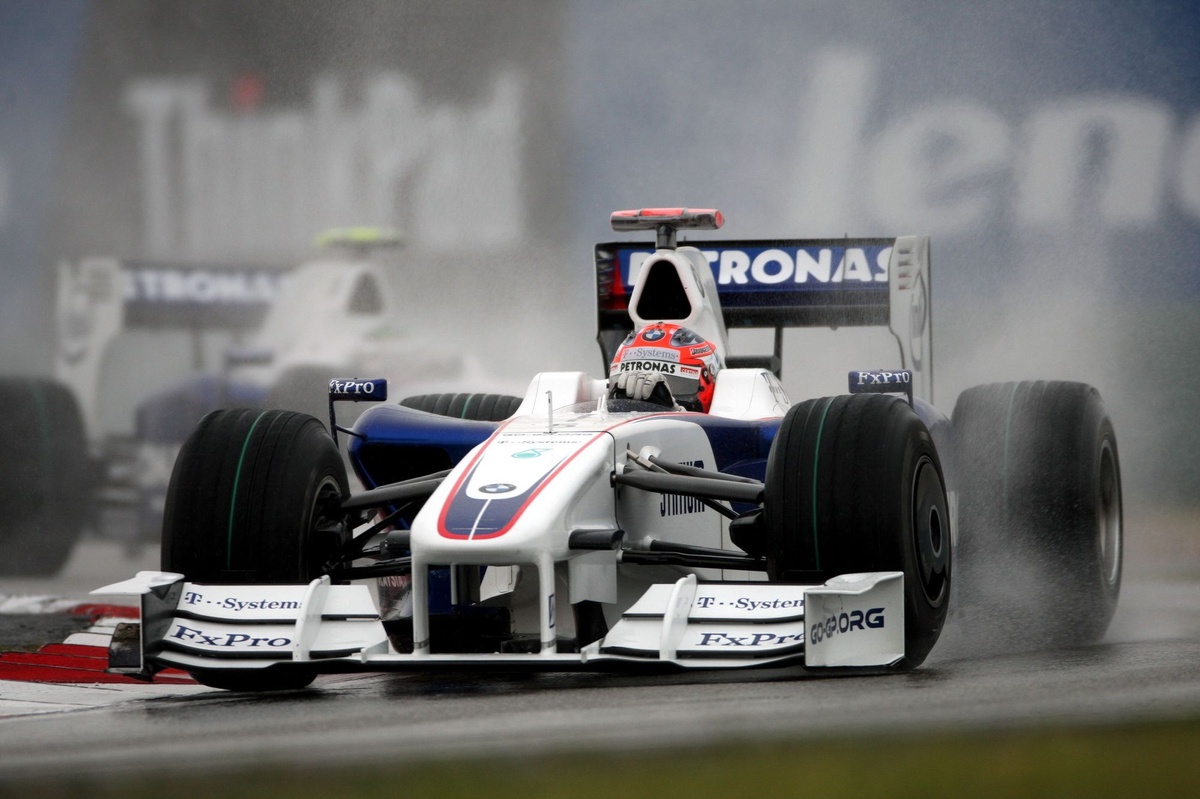
BMW has ruled out joining Mercedes and Audi in Formula 1, citing limited opportunities to transfer racing technology to its production cars.
The Munich-based manufacturer has been absent from F1 since selling its majority stake in Sauber in 2009. However, the championship’s rising popularity and its appeal to major automotive brands have made a return increasingly attractive for carmakers.
Sauber, which BMW previously co-owned, is now controlled by Audi. Formula 1’s 2026 technical regulations have also helped attract major manufacturers and brands including Cadillac and Ford, the latter through its partnership with Red Bull’s engine programme.
Porsche also seriously considered partnering with Red Bull before negotiations collapsed in late 2022. That has left BMW as the only major German manufacturer not to have shown serious interest in entering F1 in recent years.
According to BMW M boss Frank van Meel, Formula 1 does not “fit into” the company’s motorsport philosophy, which focuses on transferring technology from racing cars to road-going models.
“Formula 1 is too far removed for us; it’s too much of a laboratory and doesn’t translate well enough to production cars,” van Meel told Motorsport.com’s sister title Motor1 Germany.
“In Formula 1, it would be a completely separate technology centre, detached from the rest.
“Our customers and fans certainly like Formula 1, but they also like motorsport that’s more direct and closer to production cars. The story behind M is that we bring motorsport into production cars. And Formula 1 simply doesn’t fit into that for us.”
“BMW grew big in the US through motorsport”
BMW remains heavily involved in other forms of motorsport, particularly sports car racing.
The BMW M Hybrid V8 is now the manufacturer’s flagship racing car. The factory-supported WRT team competes with it in both the World Endurance Championship and the IMSA SportsCar Championship.
That dual programme gives BMW a presence in some of the world’s biggest endurance races, including the 24 Hours of Le Mans and the 24 Hours of Daytona.
BMW also supplies customer teams around the world with GT3 and GT4 versions of its M4 sports car.
Van Meel believes these racing programmes are better aligned with BMW’s priorities. He also credited the company’s involvement in championships such as IMSA with helping to increase its popularity in the lucrative US market.
“For us, it’s not just about the WEC, but also about IMSA,” he said. “The USA, with around 40% of our volume, is the most important single market for BMW M. BMW grew big in the USA through motorsport. That’s why IMSA is extremely important for us.
“WEC and IMSA are also a good fit for us because of the direct technology transfer. For example, the M Concept New Class incorporates elements from the M4 GT3, such as the airflow-optimized hood and diffuser. The lighting graphics come from our LMDh race car.
“There are also transfers of technology to the powertrains. We use a V8 hybrid in motorsport and have V8 hybrids in the M5 and XM. In some cases, the same engineers work on these powertrains. We can test certain aspects more quickly and in a more production-ready way through these racing series.”