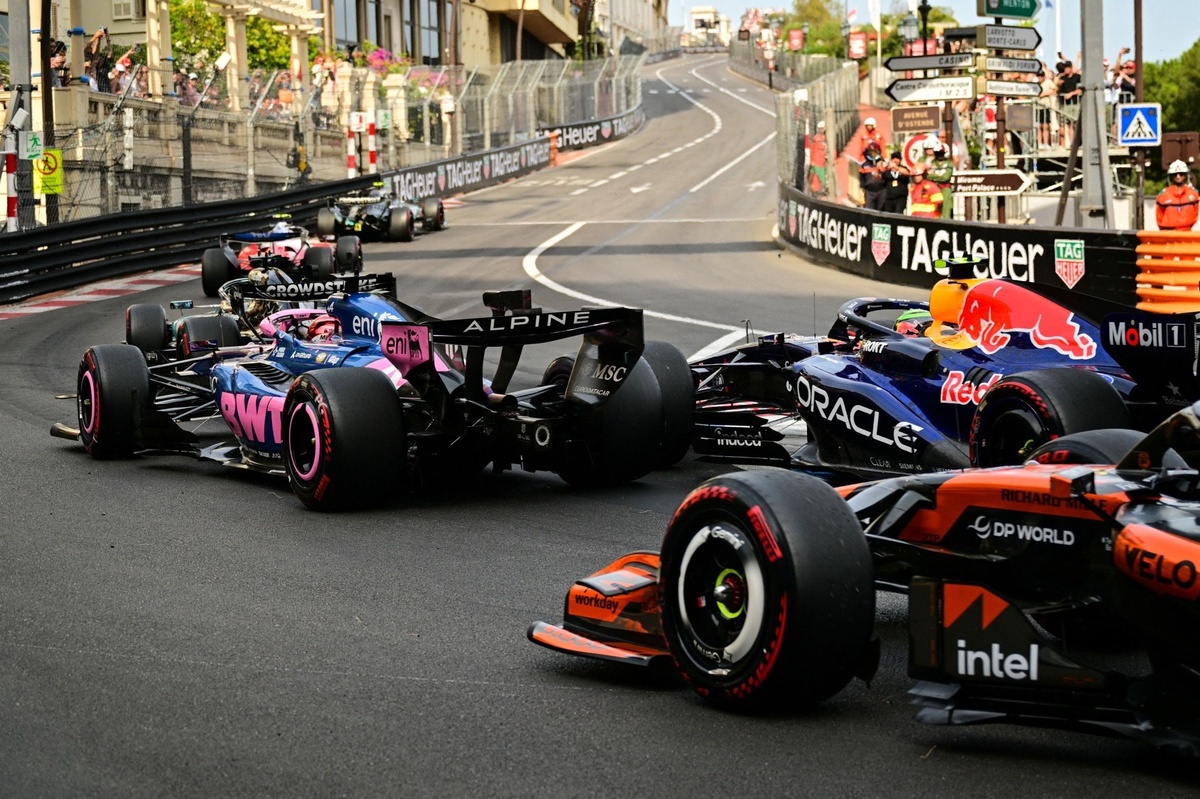
Nearly three months after the Monaco Grand Prix, the final result of Formula 1’s most prestigious race remains unresolved.
Pierre Gasly’s time penalty for speeding in the pit lane was overturned in the week after the race, restoring him to third place and demoting Isack Hadjar. The dispute did not end there.
McLaren and Red Bull have challenged the decision before the FIA’s International Court of Appeal (ICA), which heard the case last Wednesday. However, the parties involved have indicated that an immediate verdict is unlikely. A decision, or at least an explanation of the decision, could take another two to three weeks, in line with the usual procedure for an ICA case.
Why the Monaco GP appeal is taking so long
The full-day hearing was unusual. The ICA heard arguments from all sides, but the judges need time to reach a considered judgment because of the complexity of the legal issues and the wider implications for Formula 1.
McLaren has linked the case to broader “principles of fairness”. Hadjar and Oscar Piastri both lost positions and championship points after Gasly’s penalty was overturned, but both teams argue that more is at stake. They have described the events in Monaco as a potentially dangerous precedent.
McLaren team principal Andrea Stella described a “double intent” behind the appeal at Zandvoort, saying the issue goes beyond the points lost in the drivers’ and constructors’ championships.
“We think that the process that happened after the race in Monaco is a process that needs to be reviewed from a fairness [point of view] for all competitors. The fact that the penalty was removed introduces some significant elements of concern,” McLaren’s team principal said.
“There’s obviously more related to this case. It can go into the technical aspects of how the pit limiter speed was calculated. But for me, at a high level, it’s more the fairness and the principle that needs to be clarified and possibly reinstated. I think what happened sets some significant concerns.”
Stella’s comments refer to the precedent that could be created if drivers and teams are encouraged to avoid serving time penalties during a race and instead challenge them after the chequered flag.
Oscar Piastri and George Russell were among the drivers who paid the price in Monaco. The Mercedes driver unsuccessfully attempted to serve his time penalty and received an additional drive-through penalty as a result. He ultimately finished without points in the principality, with no opportunity to change the outcome afterwards despite Mercedes exploring its options.
The teams also believe that if the measurements were inaccurate for everyone, accepting the system’s flaws is part of the responsibility of competing in a championship. Otherwise, the case could open a can of worms.
Why a fair Monaco GP result may be impossible
McLaren and Red Bull argue that the case sets an important precedent, but the ICA judges are effectively being asked to choose between two unsatisfactory outcomes. An ideal solution for the Monaco race is no longer available.
Following the Monaco Grand Prix, officials established that the pit-lane measurement was inaccurate. There was a 77cm discrepancy in the distance between two timing loops, meaning the speed readings were incorrect and it could not be proven that drivers such as Gasly had exceeded the limit.
Now that the measurement has been shown to be inaccurate, reinstating Gasly’s time penalty would be difficult in hindsight. However, other drivers who may have been wrongly penalised cannot recover the time they lost. As a result, achieving a fair outcome for everyone is virtually impossible, regardless of the ICA’s eventual decision.